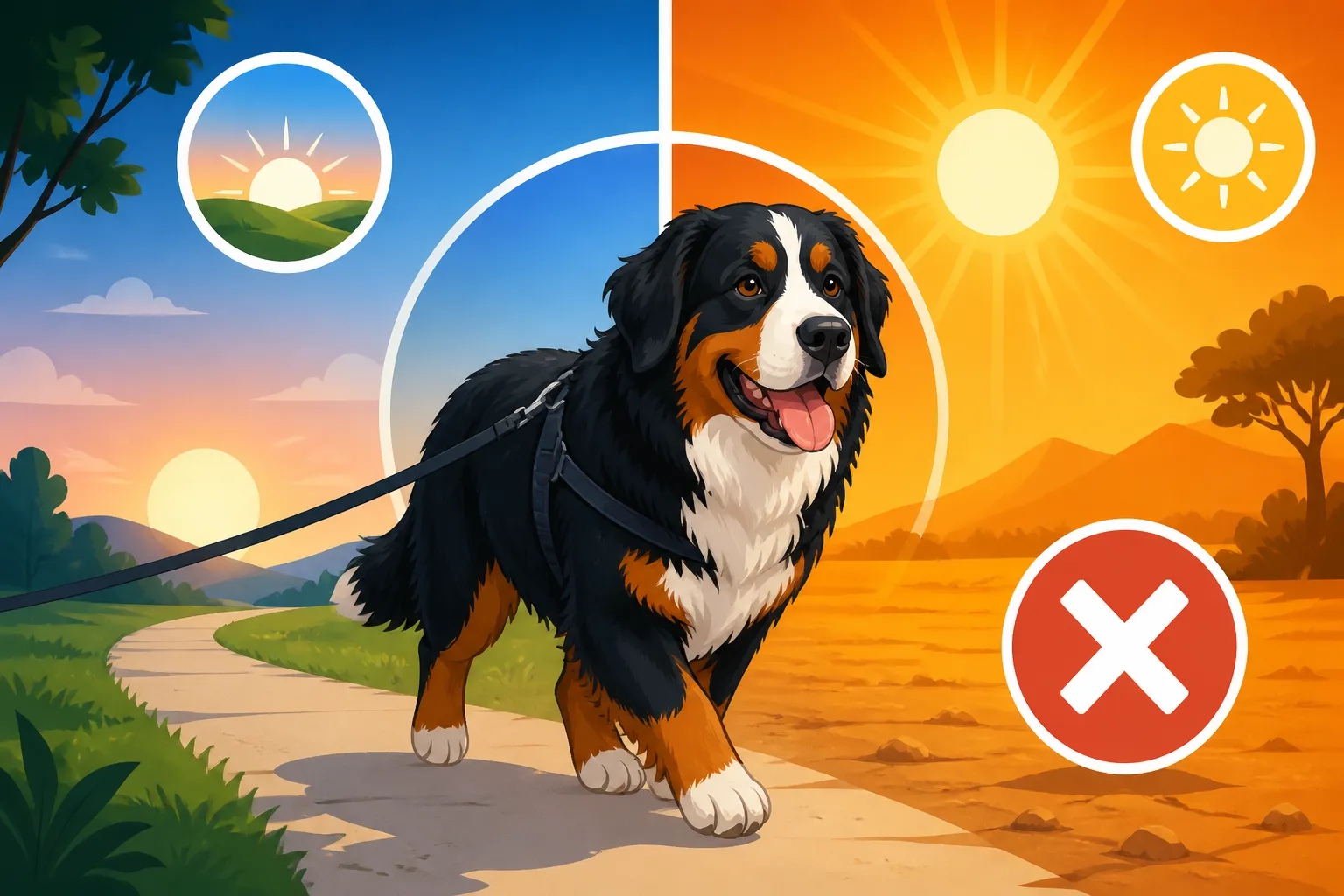
The Only Hours a Bernese Mountain Dog Walks in July
July is here, and for us Bernese Mountain Dog owners, it often brings a unique kind of dread when it comes to getting our beloved giants out for a walk. That thick, glorious coat that makes them look so majestic in winter becomes a heavy burden in the summer heat, and knowing when, or even if, it's safe to take them outside can feel like a constant gamble. This guide will walk you through the essential considerations for exercising your Bernese Mountain Dog safely during the hottest month of the year, focusing specifically on how to pinpoint those precious, often fleeting, safe walking hours.
Understanding the Bernese Mountain Dog's Unique Vulnerability to Heat
Let's be honest, our Berners aren't built for scorching summer days. Their very design, honed over centuries in the chilly Swiss Alps, makes them particularly susceptible to overheating. It's not just their long, dense coat; it's a combination of factors that put them at a higher risk than many other breeds.
The Double-Layered Coat and Black Pigmentation
One of the most obvious challenges is that magnificent double coat. It's fantastic for keeping them warm when they're pulling carts through snow, but in July, it acts like a thick, insulating blanket. Beneath the longer outer guard hairs lies a dense, woolly undercoat that traps heat close to their body. We've all seen The Case Against Shaving a Bernese Mountain Dog in June—it might seem like a good idea, but it actually disrupts their natural thermoregulation and can lead to sunburn or improper regrowth.
Beyond the sheer volume of fur, a significant portion of their coat, especially their backs and sides, is solid black. Black absorbs and retains heat from the sun far more efficiently than lighter colors. Think about wearing a black shirt on a sunny day versus a white one – it's the same principle for our dogs. This means they're not just insulating heat from within, but actively absorbing more radiant heat from their environment. This is why Why a Black Coat Overheats a Bernese Mountain Dog is such a critical consideration. You can feel the warmth just placing your hand on their black fur in direct sunlight, even on a moderately warm day.
Brachycephalic Tendencies and Respiratory Challenges
While not truly brachycephalic like a Bulldog or Pug, many Bernese Mountain Dogs have a somewhat shorter muzzle compared to other working breeds. This anatomical feature, combined with their sheer size and lung capacity, can impact their ability to efficiently cool themselves through panting. Dogs don't sweat over their bodies like humans do; their primary mechanism for heat dissipation is panting. When a dog pants, air passes over the moist surfaces of their tongue, mouth, and respiratory tract, allowing for evaporative cooling. If their airway is even slightly compromised by conformation, or if the air itself is already humid, this process becomes much less effective.
Imagine trying to cool yourself down by fanning yourself with humid air; it just doesn't work as well. Our Berners can struggle to move enough air to get that efficient cooling, making them much more vulnerable when the mercury rises. This respiratory challenge adds another layer of risk, turning a seemingly benign warm day into a potentially dangerous one.
Pinpointing the Elusive Safe Walking Hours in July
So, given their inherent challenges, how do we figure out when it's genuinely safe to take our big, beautiful Berners out for a walk in July? It's often a much shorter window than you might think, and it requires a keen eye on multiple environmental factors, not just the temperature.
Early Morning: The Golden Window
For many regions, the absolute best time for a Bernese Mountain Dog walk in July is truly in the pre-dawn or very early morning hours. We're talking before 8:00 AM, and sometimes even earlier if you live in a particularly hot climate. This is when the air temperature is at its lowest point, having had all night to cool down.
The key here isn't just the ambient temperature; it's also the ground temperature. Pavement, asphalt, and even concrete can absorb and retain a tremendous amount of heat throughout the day, radiating it back up even after the sun has gone down or before it has fully risen. A good rule of thumb is the "five-second rule": place the back of your hand on the pavement for five seconds. If it's too hot for your hand, it's too hot for your dog's paws. Our Berners' pads are tough, but they're not invulnerable to burns.
In those early morning hours, the sun is lower in the sky, meaning less direct radiant heat hitting their black coats. The humidity might still be a factor, especially in certain climates, but generally, the air feels fresher and cooler. This precious window might only last an hour or two before the sun starts to climb, and the day's heat begins its relentless assault. You might find yourself setting your alarm clock earlier than you ever thought possible for the sake of your furry friend, but their safety is paramount.
Late Evening: A Cautious Second Choice
The late evening can sometimes offer another opportunity, but it comes with more caveats. Often, even after the sun has set, the residual heat from the day can linger, particularly in urban environments with a lot of concrete and asphalt. The air temperature might drop, but the pavement can still be dangerously hot for hours.
Again, the five-second rule for pavement is non-negotiable. You'll also want to consider the humidity. If it's a muggy, still evening, the air might feel heavy and stifling, making it difficult for your Berner to cool themselves through panting. A gentle breeze can make a huge difference in these conditions.
Generally, you're looking at walking after 8:00 PM, potentially much later in very hot regions. Even then, keep the walk short, stick to grassy or shaded areas as much as possible, and bring plenty of water. It's often a less reliable window than the early morning, as heat waves can make evening temperatures stubbornly high. The Hours a Bernese Mountain Dog Should Not Walk are usually those peak afternoon and early evening times when the sun is highest and the ground has absorbed the most heat.
A Quick Glance at Safe vs. Risky Walking Conditions
To make it a little easier to gauge, here's a general guide. Remember, these are approximations, and your dog's individual health, age, and fitness level always play a role.
| Factor | Safe Range (Generally) | Risky Range (Avoid/Use Extreme Caution) |
|---|---|---|
| Air Temperature | Below 70°F (21°C) – ideal for longer walks | Above 75°F (24°C) – caution, short walks only |
| 70-75°F (21-24°C) – moderate risk, monitor closely | Above 80°F (27°C) – extremely dangerous, avoid walks | |
| Humidity | Low to Moderate (below 50-60%) | High (above 60-70%) – significantly increases risk at any temperature |
| Pavement/Ground | Cool to touch, shady grass or dirt pathways | Hot to touch (can't hold hand for 5 seconds), direct sunlight pavement |
| Sun Exposure | Overcast, deep shade, pre-dawn/post-dusk | Direct mid-day sun |
| Dog's Condition | Hydrated, energetic, no pre-existing conditions | Already panting heavily, obese, elderly, respiratory issues |
This table provides a snapshot, but always trust your instincts and err on the side of caution. It's better to miss a walk than to risk your Bernese Mountain Dog's health.
Recognizing the Red Flags: Signs of Heat Stress
Our Berners are stoic, and sometimes it can be hard to tell when they're truly struggling until it's too late. That's why it's absolutely crucial for us owners to be vigilant and know the early signs of heat stress, which can quickly escalate to heatstroke, a life-threatening emergency. Knowing How a Bernese Mountain Dog Behaves Before Heat Stroke can literally save their life.
Early Warning Signs: Keep a Close Watch
The moment you step outside with your Bernese Mountain Dog in July, even during those "safe" hours, you need to be a hawk. Look for these initial indicators:
- Excessive Panting: Yes, dogs pant to cool down, but excessive panting, especially if it seems labored, unusually loud, or if their tongue is hanging out very wide and appearing thick, is a major red flag. They might sound like they're struggling to catch their breath.
- Bright Red Gums/Tongue: Check their gums and tongue. If they are much redder than their usual healthy pink, it indicates increased blood flow as their body tries to dissipate heat.
- Seeking Shade or Lagging Behind: A Bernese Mountain Dog that usually bounds ahead but suddenly starts lagging, pulling towards shady spots, or refusing to move is telling you something. They're trying to escape the heat.
- Reluctance to Walk: If they usually love their walks but are showing unusual hesitation or outright refusal, pay attention.
- Dull or Glassy Eyes: Their eyes might look a bit unfocused or glazed over, indicating discomfort and distress.
These are not just signs of being "a little warm"; these are signals that their body is already working overtime and is nearing a dangerous threshold.
Advanced Symptoms: Emergency Action Required
If you see any of these, your dog is in immediate danger, and you need to act fast. This is where you might need to know about Cooling a Collapsed Bernese Mountain Dog in the Field – because acting quickly and effectively in the moment can make all the difference.
- Weakness or Staggering: They might start to lose coordination, stumble, or even collapse. Their legs might give out from under them.
- Vomiting or Diarrhea: These are common physiological responses to severe heat stress as their body's systems begin to shut down.
- Excessive Drooling: Beyond normal Berner drool, this is thick, ropey saliva, often combined with intense panting.
- Disorientation or Confusion: They might seem unaware of their surroundings, bumping into things, or just looking utterly lost.
- Seizures: In the most severe cases, heatstroke can lead to seizures.
- Unconsciousness: This is an extreme emergency and requires immediate veterinary intervention.
If you observe any of these advanced symptoms, stop all activity immediately. Get your dog to the coolest, shadiest spot you can find. Begin to cool them down with lukewarm (not ice cold, which can cause shock) water on their paws, belly, and inner thighs. Use a fan if available. Offer small amounts of water, but don't force it. And most importantly, get them to an emergency vet right away. Heatstroke causes Lasting Damage After a Bernese Mountain Dog Overheats and can be fatal.
Alternative Exercise and Summer Care Beyond Walks
Okay, so July's heat often means drastically cutting back on traditional walks. This can be frustrating because our Berners still need mental and physical stimulation! The good news is there are plenty of ways to keep them happy and healthy without risking heatstroke.
Indoor Activities and Mental Stimulation
When the thermometer outside is screaming "stay indoors," it's time to get creative inside. Your Berner might not be able to run a mile, but their intelligent minds still need a workout.
- Puzzle Toys: These are fantastic for keeping their brains engaged. Fill a Kong or a similar puzzle toy with kibble or peanut butter (xylitol-free!) and freeze it. It provides a long-lasting, cooling activity. You can find a huge variety of these on Amazon or Chewy.
- Training Sessions: Even short, 10-15 minute training sessions in an air-conditioned space can burn mental energy. Practice new tricks, reinforce old commands, or even try some indoor "agility" by having them weave between your legs or jump over low objects. Keep it fun and rewarding.
- Hide and Seek: Hide treats or even yourself, and encourage your Berner to find you. This uses their natural scenting abilities and is a great bonding activity.
- Chew Toys: Quality chew toys can provide hours of entertainment and help satisfy their natural urge to chew. Just make sure they're appropriate for a powerful Berner jaw and supervised to prevent choking hazards.
Remember, a tired mind can be just as satisfying as a tired body for our Berners, especially when outdoor exercise is limited.
Cooling Strategies and Gear for Summer
Even when you're mostly indoors, keeping your Bernese Mountain Dog cool is a continuous effort. There's an array of products and practices that can help.
- Cooling Beds and Mats: These are fantastic! Many cooling mats use a gel that activates with pressure, providing a cool surface for your dog to lie on. Elevated cots also allow for airflow underneath, which can make a big difference. Searching on Amazon for "cooling mat for large dogs" or "elevated dog bed Bernese Mountain Dog" will give you plenty of options. Cooling Mats and Where a Bernese Mountain Dog Lies can really help them find comfort in warmer rooms.
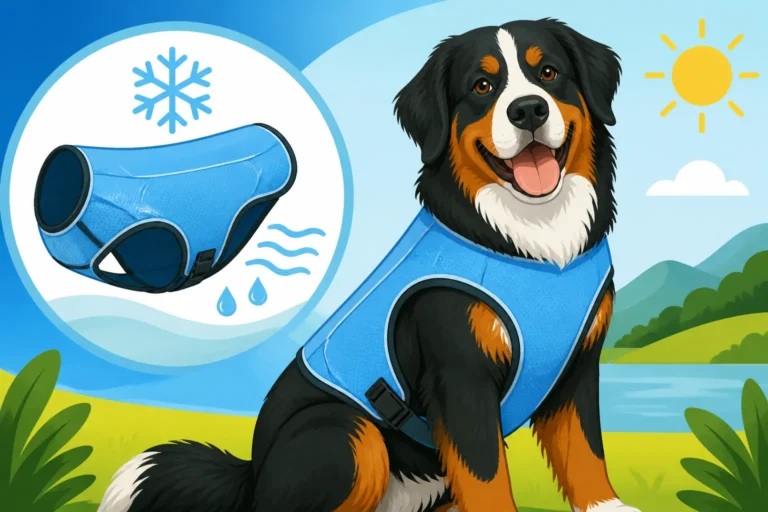
- Cooling Vests and Bandanas: If you absolutely must go out for a very short, early morning potty break or a quick car ride, a cooling vest or bandana can offer some temporary relief. These are usually soaked in water and then worn, providing evaporative cooling. You'll find these on Chewy or Amazon too. Cooling Gear for a Bernese Mountain Dog can be a lifesaver for minimal outdoor exposure.
- Water Play: A kiddie pool filled with just a few inches of water can be a wonderful way for your Berner to cool off in the shade of your yard. Many Berners love to splash! Just supervise them closely. For deeper cooling, Whether a Paddling Pool Helps a Bernese Mountain Dog is often a resounding yes.
- Frozen Treats: Ice cubes, frozen broth, or specially made frozen dog treats can help cool them from the inside out and keep them hydrated.
- Hydration Stations: Always have fresh, cool water available in multiple spots around your home. Consider adding ice cubes to their water bowl to keep it cooler longer.
Optimizing Your Home Environment
The way you manage your home environment can significantly impact your Bernese Mountain Dog's comfort during July.
- Air Conditioning is Your Friend: If you have it, use it. Keeping a Room Cool Enough for a Bernese Mountain Dog means aiming for a comfortable indoor temperature, usually in the low 70s Fahrenheit (around 22-23°C). Don't rely solely on open windows unless there's a significant, consistent breeze and the outdoor temperature is truly cool.
- Fans: Strategic placement of fans can help circulate air and create a cooling effect, especially if your Berner loves to lie directly in front of one.
- Shade Management: If your Bernese Mountain Dog spends any time in the yard, ensure there's ample, consistent shade. Consider adding a tarp or umbrella if natural shade is lacking. Shade a Bernese Mountain Dog Needs in a Yard is not a luxury, it's a necessity.
- Limit Car Rides: Even with the AC blasting, cars can heat up incredibly quickly, especially if you stop for even a moment. Limit car travel during peak heat, and never, ever leave your Berner unattended in a vehicle.
Living with a Bernese Mountain Dog in July requires extra thought, a lot of vigilance, and a willingness to adapt. By understanding their vulnerabilities, being diligent about safe walking times, recognizing the signs of heat stress, and offering plenty of safe, cool alternatives, you can help your gentle giant enjoy the summer months without compromising their health.
Disclaimer
This article is for general informational purposes only and does not constitute professional advice. Laws, prices and regulations vary by location and change over time. Consult a qualified professional for guidance on your specific situation.