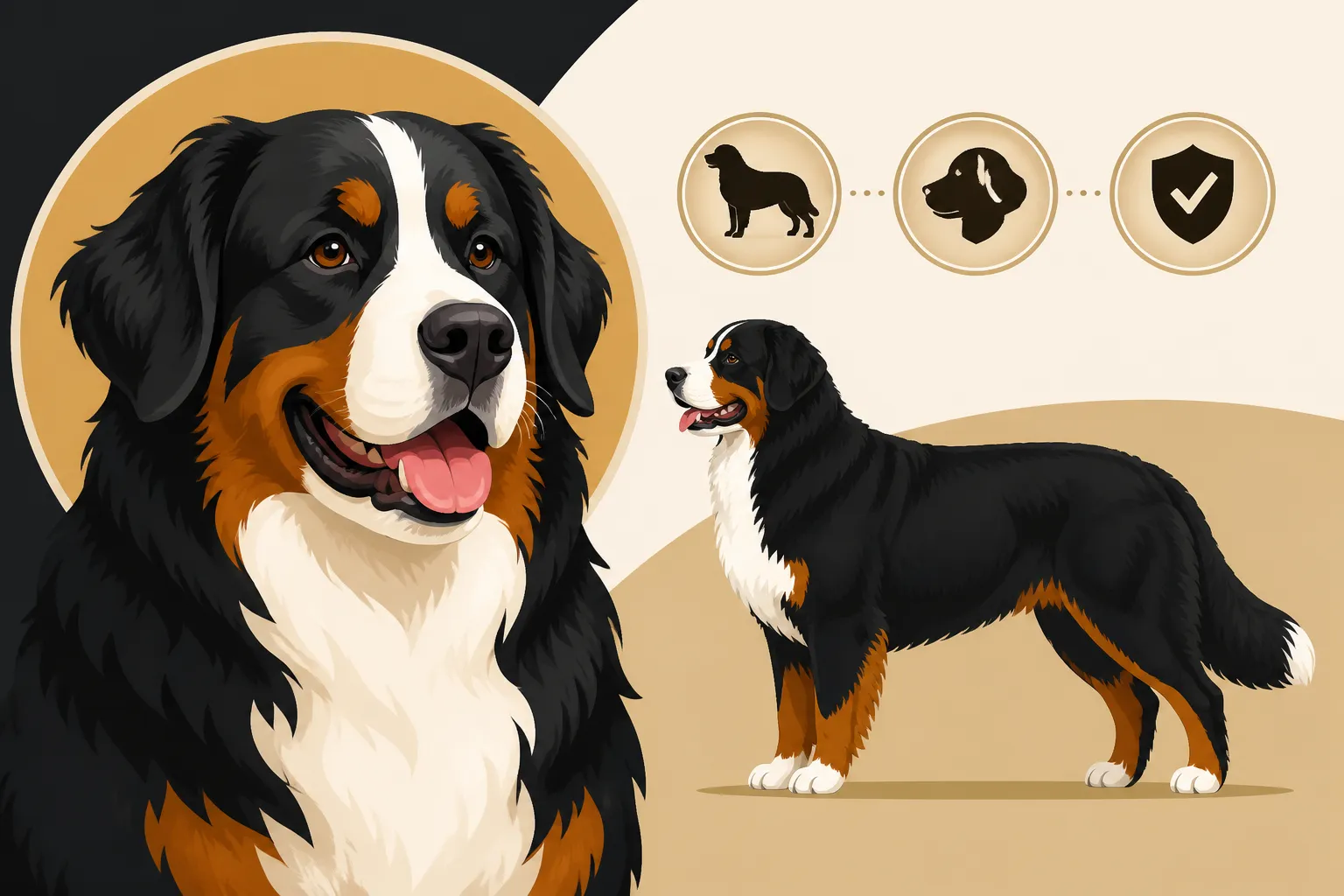
The Bernese Mountain Dog Breed Standard
If you’ve ever found yourself scrolling through pictures of Bernese Mountain Dogs, admiring their majestic stature and striking tricolor coats, you're not alone. But have you ever wondered what makes one Berner a quintessential example of the breed, while another, equally beloved, might diverge slightly from that ideal? That’s where the breed standard comes in – it's a blueprint, a detailed description created by the parent club to define the ideal characteristics, temperament, and appearance of a Bernese Mountain Dog, guiding breeders, judges, and enthusiasts alike. This guide will take a deep dive into what that standard truly means for these magnificent dogs.
Understanding the Purpose of a Breed Standard
It’s easy to dismiss a breed standard as something only for show dog enthusiasts or highly specialized breeders. However, for those of us who simply adore our Berners, understanding the standard provides a powerful lens through which to appreciate the breed's history, function, and enduring characteristics. It's not just about looks; it's about preserving the essence of the Bernese Mountain Dog.
Why Standards Exist for Breeds
Think of the breed standard as the historical document that defines what a Bernese Mountain Dog is. Without it, every breeder might pursue a different vision, and over time, the breed could splinter into many variations, losing the distinct traits that make a Berner a Berner. The standard acts as a guide to ensure consistency across generations and kennels. It’s a shared vision for preserving the breed's unique qualities, from their temperament to their physical capabilities.
For instance, the original Bernese Mountain Dogs were sturdy farm dogs from the Swiss Alps, relied upon to pull carts, drive cattle, and guard homesteads. Every aspect of their physical structure and temperament outlined in the standard today — from their strong bones to their calm demeanor — is a nod to these historical roles. It helps ensure that while our modern Berners might be cherished family pets, they still retain the underlying physical and mental attributes that allowed their ancestors to thrive in challenging environments.
Guiding Breeders and Judges
For breeders, the standard is the ultimate goal. Reputable breeders meticulously study it, striving to produce dogs that embody its ideals, not just in appearance but also in health and temperament. They use it to select breeding pairs, evaluate puppies, and make decisions that will shape the future of their lines. It helps them avoid exaggerations or traits that could lead to health issues or compromise the dog's ability to live a full, active life.
For judges in the show ring, the standard is their rubric. When a Bernese Mountain Dog steps into the ring, the judge is comparing that individual dog against the written description of the perfect Berner. They're looking at everything from the angle of the shoulders to the set of the tail, evaluating how closely the dog conforms to the ideal. This system helps ensure that dogs recognized as excellent examples of the breed are truly representative of what a Bernese Mountain Dog should be.
The Bernese Mountain Dog's General Appearance
When you see a Bernese Mountain Dog, there's an immediate impression of strength, dignity, and calm good nature. The breed standard begins by capturing this overall essence, painting a picture of a dog that is both powerful and graceful, perfectly suited for its alpine origins. It’s about more than just size; it’s about proportion, balance, and that undeniable Berner presence.
Size, Substance, and Bone
The standard specifies a particular range for height and weight, though it emphasizes that balance and substance are paramount. For males, the ideal height at the shoulder is typically around 25-27.5 inches, with females slightly smaller at 23-26 inches. However, what’s more important than hitting an exact number is that the dog appears substantial, but not clumsy. They should have good bone — strong, sturdy legs, not spindly — which gives them the power needed for pulling and working in rugged terrain.
This "substance" is crucial. A Berner isn't meant to be delicate; they're built for endurance and strength. Imagine the heft required to pull a cart full of goods over uneven ground; a dog lacking sufficient bone and muscle would quickly tire or risk injury. The standard ensures that the breed retains this inherent robustness, which also contributes to their imposing yet gentle appearance. Even if your Berner isn't destined for the show ring, understanding these physical requirements helps you appreciate the breed's functional design.
Overall Balance and Proportions
A truly well-balanced Bernese Mountain Dog will appear harmonious from nose to tail. The standard calls for a dog that is longer than it is tall, with a body length to height ratio of approximately 9:10. This rectangular shape is characteristic of the breed and contributes to their powerful, yet agile, movement. It’s not a square dog like some other breeds; that slight elongation gives them better reach and drive in their gait.
Think about watching a Berner move: a well-proportioned dog moves with an easy, powerful stride, covering ground efficiently. A dog that is too short in body might look bunched up and lack fluidity, while one that is excessively long could appear weak in the back. The goal is a dog where every part fits together perfectly, creating a picture of strength without bulkiness, and agility without fragility. This balance is what gives the Bernese Mountain Dog its distinctive silhouette and elegant presence, whether they're trotting across a field or simply lounging on their favorite bed from Chewy.
Head and Expression
The Bernese Mountain Dog's head is one of its most defining features, not just for its physical attributes, but for the gentle, intelligent, and loyal expression it conveys. The standard meticulously describes every aspect, understanding that the head truly captures the heart of the breed's personality. The Kind Expression a Bernese Mountain Dog Standard Wants is truly unique.
Skull, Muzzle, and Stop
The Berner's skull should be broad and slightly rounded on top, not flat, providing ample room for their magnificent brain. There should be a well-defined, but not abrupt, stop – that’s the indentation where the muzzle meets the forehead. A stop that’s too shallow or too deep can dramatically alter the dog's characteristic gentle look. The muzzle itself should be strong and deep, tapering only slightly, but never pointed or weak. It should be roughly equal in length to the skull, giving a balanced appearance.
A weak or snipey muzzle, for instance, would be a fault because it suggests a lack of strength in the jaw, which was historically important for catching and holding livestock. Similarly, a skull that is too narrow or too domed would deviate from the ideal, impacting both the dog's appearance and potentially its bite. These details might seem minor individually, but together they craft the specific, recognizable Berner head that we all love.
Eyes, Ears, and Bite
The eyes are often called the windows to the soul, and for the Bernese, this is especially true. The standard calls for dark brown, almond-shaped eyes that are set moderately deep, giving a warm and intelligent expression. Lighter eyes, or eyes that are too round or protruding, are considered a fault as they can detract from that characteristic soft and friendly look. The Bernese Mountain Dog Eye Shape and Color is critical to their overall appeal. The rims of the eyes should be black and tight, without any looseness that might expose the haw.
Their ears are medium-sized, triangular in shape, with a slightly rounded tip, and set high on the head. When the dog is alert, the ears should frame the face, lying close to the head. A correct ear set contributes greatly to the expression, framing those soulful eyes perfectly. As for the bite, a strong scissor bite is required, where the outer side of the lower incisors just touches the inner side of the upper incisors. This strong, correct bite is essential for any working dog, ensuring they can grip and carry objects effectively. Any deviation, such as an undershot or overshot jaw, would be a serious fault.
Body and Structure
Beyond the head, the Bernese Mountain Dog's body is a testament to its working heritage. Every curve, every angle, and every proportion is designed for strength, endurance, and efficiency. The standard details a powerful yet athletic build, emphasizing functionality alongside aesthetic appeal. The Sturdy Frame a Bernese Mountain Dog Standard Describes is foundational to the breed.
Neck, Topline, and Chest
The neck should be strong, muscular, and medium in length, blending smoothly into well-laid-back shoulders. A short, thick neck can make the dog appear clumsy, while an overly long or thin neck would lack the necessary power. The topline – the line of the back from the withers to the tail – should be level and firm, even when the dog is moving. A sagging or roached back is a fault, as it can indicate structural weakness that would compromise their ability to perform their duties. The Bernese Mountain Dog Topline the Standard Wants is a hallmark of good breeding.
The chest should be broad and deep, reaching at least to the elbows. This deep chest provides ample room for healthy lung and heart development, crucial for stamina in a working breed. However, it shouldn't be so broad as to impede movement. The ribs should be well-sprung, meaning they curve out nicely from the spine, but not barrel-chested, allowing for flexibility and preventing an awkward gait. This combination of strength and capacity is vital for a dog that was historically required to perform strenuous tasks.
Loin, Croup, and Tail
Moving further back, the loin (the area between the last rib and the hips) should be strong, muscular, and moderately short. A long, weak loin can compromise the dog’s power and endurance. The croup, which is the part of the back from the pelvis to the base of the tail, should be broad and gently rounded. A flat or steep croup is considered a fault, as it affects the dog’s rear angulation and, consequently, its ability to drive forward effectively.
The tail is a natural extension of the topline. It should be bushy and reach at least to the hocks (the joint on the back leg, similar to an ankle). When the dog is relaxed, the tail should hang down in a slight curve. When alert or in motion, it can be carried gaily, curving upwards, but it should never curl over the back or be carried straight up like a flagpole. The Tail Carriage a Bernese Mountain Dog Standard Wants is a subtle but important indicator of breed type. A kinked or abnormally short tail would be a fault, as it deviates from the natural, balanced appearance and can sometimes indicate spinal issues.
Forequarters and Hindquarters
The Bernese Mountain Dog's limbs are the engines that power their impressive frame. The standard outlines specific angulations and muscle development that ensure efficient movement, durability, and the ability to handle heavy loads over varied terrain. It’s all about creating a robust, functional structure.
Shoulders, Legs, and Pasterns
The forequarters begin with well-laid-back shoulders that form a good angle with the upper arm. This angulation is critical for proper reach and freedom of movement. If the shoulders are too straight, the dog will have a choppy, restricted gait. The legs themselves should be straight, strong, and well-muscled, viewed from any angle. The bone should be substantial, echoing the general emphasis on "substance" throughout the standard.
The pasterns, which are the equivalent of our wrists, should be strong and slightly sloping. This slight angle acts as a shock absorber, protecting the joints from impact during movement. Pasterns that are too straight or too weak (often appearing bowed or down on their heels) are considered faults because they compromise the dog's soundness and increase the risk of injury, especially under the considerable weight of a Bernese Mountain Dog.
Angulation, Thighs, and Feet
The hindquarters are equally important, providing the powerful drive for movement. They should be strong, broad, and muscular, with good angulation at the stifle (knee) and hock joints. This angulation allows for efficient propulsion, enabling the dog to push off the ground with force. Over-angulation or under-angulation can both lead to inefficient gaits and potential long-term joint strain.
The thighs should be broad and heavily muscled, clearly indicating the strength packed into these limbs. The hock joints should be clean, turning neither in nor out, and appear strong. The feet, both front and rear, should be compact, round, and well-arched, with well-cushioned pads. Strong feet are essential for traction and durability on varied surfaces, providing a solid foundation for the dog's large frame. Loose, splayed, or weak feet are considered faults as they hinder the dog's ability to move and can lead to discomfort or injury over time.
Coat and Color: The Iconic Tricolor
Perhaps the most visually striking characteristic of the Bernese Mountain Dog is its magnificent tricolor coat. It's not just beautiful; it's a testament to their heritage as mountain dogs, providing insulation and protection. The standard is very precise about its texture, length, and, especially, the placement of its distinctive markings.
Coat Texture and Length
The Bernese Mountain Dog has a double coat, essential for protection against the harsh Alpine weather. The outer coat is thick, moderately long, and can be either slightly wavy or straight. A curly coat would be considered incorrect. The texture should feel somewhat coarse to the touch, providing durability and shedding precipitation effectively. Underneath this outer coat lies a dense, woolly undercoat, which is vital for insulation in cold climates. This undercoat will shed heavily twice a year, often leading to huge piles of fur, even with regular brushing using a good deshedding tool from Chewy.
The standard prefers a natural look, meaning the coat should not be excessively trimmed or sculpted, beyond neatening feet or hocks. The Bernese Mountain Dog Coat Texture a Judge Feels is often a point of evaluation. A soft, silky coat or a coat that is too short or sparse would be considered faulty, as it wouldn't offer the necessary protection for a working mountain dog. Conversely, a coat that is too long or fluffy can be a grooming nightmare and also fall short of the ideal working coat.
Tricolor Markings and Placement
The Bernese Mountain Dog's color pattern is famously tricolor: a jet black ground color with rich rust or tan markings, and distinctive white markings. The black should be deep and lustrous. The rust markings are typically found over each eye, on the cheeks, on all four legs between the black and white, and under the tail. Rust Markings on a Bernese Mountain Dog add warmth and definition to their appearance.
The white markings are perhaps the most recognizable. The standard requires a white blaze on the head, which widens towards the muzzle, and a white chest marking, often referred to as the "Swiss cross" or "Swiss Kiss." A moderate amount of white on the feet is also allowed, and often a white tip on the tail. The blaze should ideally be symmetrical and not extend past the inner corner of the eyes. The Swiss Cross on a Bernese Mountain Dog's Chest is a classic feature. Any color other than the prescribed tricolor, or markings that are too extensive or too sparse, are serious faults or even disqualifications. Whether a Bernese Mountain Dog Can Be Any Other Color is a definite "no" in the standard.
Temperament: More Than Just Looks
While physical attributes are crucial, the Bernese Mountain Dog's temperament is arguably its most endearing and defining characteristic. The standard places immense importance on a stable, confident, and good-natured disposition, reflecting the breed's historical role as a trusted companion and worker.
Confident and Good-Natured Demeanor
The ideal Bernese Mountain Dog is described as "self-confident, good-natured, peaceable, and friendly." This means a dog that is secure in itself, not overly timid or aggressive, and possesses a gentle disposition towards people and other animals. They should be approachable and tolerant, making them wonderful family companions. A Berner should embody a serene presence, comfortable in various situations without being easily spooked or provoked. Self-Confident and Good-Natured in the Bernese Mountain Dog Standard are key terms.
A truly good-natured Berner will greet strangers with a calm curiosity, rather than overwhelming enthusiasm or fearful avoidance. They are loyal to their families, often forming deep bonds. Deviations from this ideal temperament, such as excessive shyness, nervousness, or aggression, are considered very serious faults. These traits not only make for a difficult pet but also go against the very essence of what a Bernese Mountain Dog is meant to be. This is a breed that was entrusted with children and livestock, and their temperament was, and remains, paramount.
Reserved with Strangers
While good-natured, the standard also notes that a Bernese Mountain Dog can be "reserved" with strangers. This isn't shyness or fear, but rather a characteristic initial caution or lack of effusiveness. They might not immediately shower a new person with affection, preferring to observe before engaging. This reservation is a remnant of their guarding instincts; they were watchful without being overtly aggressive.
Once they assess a new person as friendly and non-threatening, their good nature typically shines through. It's a subtle but important distinction from true shyness or fearfulness. What the Standard Means by an Aloof Bernese Mountain Dog can be a point of misunderstanding; it's not a coldness, but a thoughtful assessment. A Berner that is truly fearful or overtly aggressive towards strangers would be considered to have a serious temperament fault, as this indicates a lack of the self-confidence and stability required by the standard.
Gait and Movement
A Bernese Mountain Dog’s movement is a poetic display of its functional design. It’s not about speed, but about power, efficiency, and endurance. The standard describes a particular gait that reflects their history as working dogs, covering ground with purpose and strength.
Powerful and Effortless Stride
The ideal Bernese gait is described as "powerful and effortless." This means the dog moves with a strong, purposeful stride, covering a lot of ground with each step, without appearing to exert excessive effort. Their movement should be free, reaching well forward with the front legs and driving strongly from the rear. When viewed from the side, the topline should remain firm and level, with no excessive bounce or roll. The Effortless Stride a Bernese Mountain Dog Should Have is a hallmark of correct structure.
A Berner isn't built for a frantic trot or a delicate prance. They were bred for long days of work on uneven terrain, requiring a gait that conserves energy and can be maintained for extended periods. A dog that moves with a short, choppy stride, or one that appears to shuffle or drag its feet, would be faulted. The harmony between their strong bone, correct angulation, and well-developed muscles should be evident in every step they take.
Tracking and Coordination
When observing a Bernese Mountain Dog moving towards or away from you, their legs should track in straight lines. As speed increases, the legs will converge towards a center line beneath the body (known as single tracking). This convergence is a natural efficiency mechanism, minimizing lateral motion and maximizing forward momentum. The feet should not swing wide, cross over, or interfere with each other.
Poor coordination, crabbing (moving with their body at an angle), or legs that turn in or out (such as toeing in or out) are all considered faults. These deviations suggest structural issues that compromise the dog’s efficiency, increase wear and tear on joints, and detract from the overall picture of a healthy, functional working dog. The powerful Bernese Mountain Dog needs to move with precision and purpose, every part of its body working in concert.
Faults and Disqualifications
Understanding the breed standard also involves knowing what constitutes a fault – or even a disqualification. These are deviations from the ideal that range from minor aesthetic concerns to serious structural or temperament issues that could impact the dog's health or ability to function as a Bernese Mountain Dog. For anyone considering breeding or showing, these details are paramount.
Minor and Serious Faults
Faults are essentially points where a dog deviates from the ideal described in the standard. They are judged on a scale, from minor to serious. A minor fault might be something like a slightly lighter eye color or a less than perfectly straight blaze. These might detract slightly from the overall perfection but don't significantly impact the dog's health or working ability.
Serious faults, however, are those that significantly compromise the dog's type, health, or function. Examples include a markedly shy or aggressive temperament, severe structural issues like bad hocks or a very poor bite, or incorrect coat texture. The Faults That Cost a Bernese Mountain Dog a Placement in the show ring are typically serious structural or temperament flaws. While a dog with a serious fault might still be a beloved pet, it would not be considered suitable for breeding to the standard, as these traits could be passed on to offspring. It's a way of protecting the integrity and health of the breed over time.
Disqualifications from the Standard
Disqualifications are the most severe deviations, meaning the dog cannot be considered a Bernese Mountain Dog according to the standard and cannot compete in conformation events. These are typically traits that fundamentally alter the breed's identity or are indicative of severe health or temperament problems. Examples include:
- Any color other than tricolor: A black-and-white Berner, or one with excessive white, or lacking rust markings entirely, would be disqualified.
- Blue eyes: Whether Blue Eyes Disqualify a Bernese Mountain Dog is a common question; yes, they do. This is often associated with other genetic issues and is not characteristic of the breed.
- Temperament: Any dog showing definite shyness or overt viciousness. This is taken extremely seriously, as temperament is foundational to the breed.
- Split nose: A physical anomaly that detracts from the breed's appearance.
- Overshot or undershot bite beyond certain limits: Indicating severe jaw misalignment.
- Absence of any rust markings: The rust is an essential part of the tricolor.
Understanding these disqualifications is vital for breeders and anyone considering purchasing a Bernese Mountain Dog, as they represent fundamental departures from the breed's core definition. The standard is there to guide us in ensuring the magnificent Bernese Mountain Dog continues to embody the qualities that make it so special for generations to come.
A Look at Bernese Mountain Dog Characteristics
To help illustrate some of the key points of the Bernese Mountain Dog breed standard, here’s a quick overview of ideal characteristics versus common faults. This isn’t exhaustive, but it highlights what judges and discerning owners look for.
| Characteristic | Ideal Standard | Common Fault | Disqualification |
|---|---|---|---|
| Height (Males) | 25-27.5 inches at shoulder | Too small or too large, lacking substance | – |
| Height (Females) | 23-26 inches at shoulder | Too small or too large, lacking substance | – |
| Expression | Gentle, intelligent, good-natured (dark almond eyes) | Hard, suspicious, overly round or light eyes | Blue eyes |
| Coat | Moderately long, thick, slightly wavy or straight | Short, sparse, overly curly, soft/silky | Any color other than tricolor |
| Markings | Jet black with rich rust and distinctive white | Smudged, too little rust, white too extensive/sparse | Absence of rust, solid black or other color |
| Topline | Level and firm | Sagging (swayback) or roached (arched) back | – |
| Movement | Powerful, effortless, ground-covering, strong drive | Choppy, lumbering, paddling, high-stepping, poor coordination | – |
| Temperament | Self-confident, good-natured, peaceable, friendly | Excessively shy, nervous, or overtly aggressive | Viciousness or definite shyness |
| Bite | Scissor bite | Level bite, slight overshot/undershot | Severely overshot or undershot, wry mouth |
Disclaimer
This article is for general informational purposes only and does not constitute professional advice. Laws, prices and regulations vary by location and change over time. Consult a qualified professional for guidance on your specific situation.