The Bernese Mountain Dog Against the Golden Retriever
Choosing between a Bernese Mountain Dog and a Golden Retriever can feel like choosing between two friendly, family-minded dogs—and then the practical differences start to matter. Their size, grooming, exercise needs, heat tolerance, and typical health concerns can shape everyday life. This guide compares those realities so you can picture which breed fits your home, routine, and expectations better.
Bernese Mountain Dog vs Golden Retriever at a glance
Both breeds are affectionate, people-oriented, and often well suited to family life. But “friendly family dog” can mean something different in practice: a Berner may be a calm, substantial companion who prefers cool-weather outings, while a Golden is often a more energetic partner for games, training, and longer adventures.
| Trait | Bernese Mountain Dog | Golden Retriever |
|---|---|---|
| Build | Large, heavy, sturdy | Large, athletic, generally lighter-framed |
| Coat | Long, dense, tricolor double coat | Dense double coat, usually golden shades |
| Grooming | Frequent brushing; seasonal shedding can be substantial | Frequent brushing; seasonal shedding can also be substantial |
| Exercise style | Regular activity, with care around heat and strenuous exertion | Regular activity and enrichment; many enjoy retrieving and active play |
| Climate considerations | Often more comfortable in cool conditions; needs careful heat management | Also needs heat precautions, but usually tolerates a wider range of activity styles |
| Training | Often responsive to kind, patient teaching; can mature slowly | Often eager to work with people and food rewards |
| Health planning | Pay close attention to breed-related risks and shorter expected lifespan | Plan for routine veterinary care and breed-related risks, including joint concerns |
| Best fit may be | A household wanting a large, close-by companion and prepared for coat care | A household wanting an active, trainable dog for varied activities |
Those are broad tendencies, not guarantees. Individual temperament, breeding, socialization, health, and age can matter as much as breed. A quiet Golden may be less demanding than a high-energy Berner, and a young Berner may be far more rambunctious than the breed’s laid-back reputation suggests.
Size changes the feel of daily life
A Bernese Mountain Dog’s weight and strength affect ordinary routines. A Berner may take up more room on the sofa, need a larger resting area, and be harder to help into a car if injured or reluctant. Their size can also make leash manners and polite greetings important early priorities. For a closer look at their build, see How Big a Bernese Mountain Dog Gets.
Golden Retrievers are large dogs too, but many people find their athletic build easier to manage during active outings. Either breed can pull hard if leash skills are not taught, and neither should be treated as automatically manageable just because it is friendly. Consider your ability to guide a strong dog through a crowded sidewalk, busy veterinary lobby, or slippery winter entrance.
The family-dog label does not replace supervision
Both breeds can be loving companions, but no dog should be expected to tolerate every interaction from a child. A large dog can knock over a small child by turning quickly or leaning in for attention, even without meaning to. Teach children to leave dogs alone while eating or sleeping, and provide each dog a quiet place where it can retreat.
A Berner’s sheer size makes household setup especially important: beds, gates, food storage, and the space needed for a dog to turn around comfortably. Goldens also need room to move, especially if they bring toys from room to room or have a habit of carrying objects around. The best choice depends on the dog’s individual temperament and the adults’ ability to supervise and set up safe routines.
Both breeds need companionship
Neither breed is a good match for a household that expects a dog to be content alone for long stretches every day without preparation. Individual dogs vary, but both can become bored or distressed when their social and activity needs are ignored. A Berner may be particularly attached to its people and prefer being near the household; The Bernese Mountain Dog That Cannot Bear Being Left explores that challenge in more detail.
If your workday requires regular time away, plan for gradual alone-time training, appropriate enrichment, and dependable help when needed. A dog walker, trusted sitter, or family member may help bridge the gap, but they do not replace teaching the dog to feel safe when alone.
Temperament, training, and exercise
The most useful comparison is not simply “calm Berner versus energetic Golden.” Both breeds need daily activity and training; they often differ more in how they enjoy spending that time. A Golden may thrive on games and structured tasks, while a Berner may prefer a steady walk followed by time near its people.
Golden Retrievers often enjoy having a job
Many Goldens are enthusiastic about retrieving, learning cues, and participating in activities with their owners. That eagerness can make training enjoyable, but it also means a bored Golden may invent its own entertainment. A dog that receives little exercise or mental stimulation might chew, carry off household objects, dig, or pester family members for attention.
Games do not have to be elaborate. Short training sessions, scent-based activities, and safe retrieving games can add variety to a walk. If you are considering a Golden because you want a dog for hiking, running, or outdoor games, think about the dog’s age, health, fitness, and comfort in warm conditions rather than assuming it can safely keep up from puppyhood.
Berners need a thoughtful mix of activity and rest
Bernese Mountain Dogs still need movement and engagement, but strenuous exercise in warm weather is a poor fit for many. Their dark, dense coats and heavy builds make heat management particularly important. Choose cooler hours for walks, bring water, watch for signs of overheating, and stop if your dog is struggling. The Swiss Valley the Bernese Mountain Dog Comes From gives more background on the breed’s origins and the environment it was developed in.
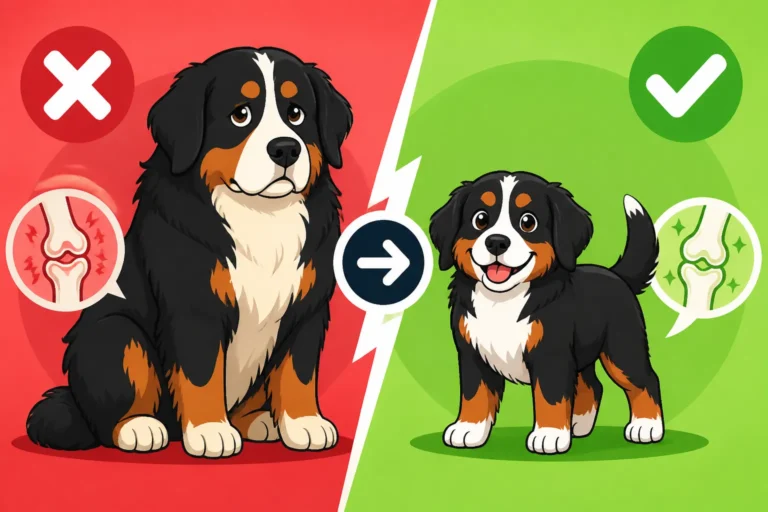
A Berner can enjoy walks, training, and appropriate recreational activities, but its body is not an invitation to push for distance or speed. Growing puppies need especially careful exercise planning. Repetitive high-impact activity and forced exercise can put unnecessary strain on developing joints. For active plans, Whether a Bernese Mountain Dog Suits a Hiker offers a more focused discussion of matching outdoor ambitions to the breed.
Both respond best to consistent, humane training
A Golden’s willingness to work does not mean every Golden learns instantly, and a Berner’s thoughtful or sometimes independent approach does not mean it cannot be trained. Use clear cues, short sessions, rewards the dog values, and a calm approach. Reward the behavior you want to see—such as walking beside you or settling on a mat—instead of waiting until a large adolescent dog has already dragged you toward a distraction.
Socialization should be gradual and positive. That means helping a puppy experience people, sounds, surfaces, and everyday settings without overwhelming it. For either breed, a puppy class led by a qualified trainer can offer structure, while one-on-one support can help if fear, pulling, or frustration becomes difficult to manage.
Coat care, food, and home setup
Neither breed is a low-shedding choice. Their coats need regular attention, and hair may collect on floors, furniture, clothing, and the back seat of the car. The right question is less “Which one sheds?” and more “How much brushing, cleaning, and routine maintenance am I willing to do?”
Expect brushing to become part of the week
A Berner’s long coat can tangle in places where friction and moisture build up, including behind the ears and around the legs. Regular brushing helps catch loose hair and small tangles before they become mats. Owners who need a detailed coat-care routine can start with Grooming a Bernese Mountain Dog's Long Tricolor Coat.
Golden Retrievers also have dense coats and shed. Their feathering can collect debris after walks, so brushing and checking for tangles are worthwhile for them too. Whichever breed you choose, teach grooming gradually: handle paws, ears, and the brush in brief, comfortable sessions, and reward cooperation. If coat tools or cleanup supplies are hard to find locally, Chewy is one place owners may look for grooming items; choose tools suited to the dog’s coat rather than buying a product simply because it is marketed for large breeds.
Make a realistic plan for meals and storage
Food needs depend on a dog’s age, body condition, activity level, and health—not just its breed label or adult size. Puppies of large breeds need an appropriate growth diet, and an adult dog’s portions should be adjusted to help maintain a healthy body condition. Your veterinarian can help you decide what to feed and how much, especially during growth or after a change in activity.
Because both dogs can be strong food-seekers, store food and treats securely. A large bag should be kept dry and protected from pests, and feeding should happen in a spot where the dog can eat without being crowded. If you are comparing food options or looking for storage supplies, Chewy may be one retail option to check, but review the food’s suitability with your veterinarian. For feeding considerations specific to Berners, see Feeding an Adult Bernese Mountain Dog Safely.
Prepare the home for a large companion
Before bringing either breed home, look beyond the dog bed. Consider whether the car has room for a crate or harness, whether the dog can get in and out safely, and how you will manage stairs if mobility becomes limited. A Berner’s size can make lifting especially difficult, so plan ahead rather than discovering during an injury or illness that help is unavailable.
Think about floors, gates, and resting spots as well. Slippery flooring can be hard for a large dog to navigate, while a well-placed rug may make a hallway or doorway more secure. Keep food, rubbish, and household hazards out of reach. Chewy may also carry practical items such as bowls, grooming supplies, and bedding, but measure your space and the dog before choosing equipment.
Health, lifespan, and the long-term decision
A dog’s health history is individual, but breed tendencies should be part of a thoughtful decision. Both breeds need routine veterinary care and preventive attention. Bernese Mountain Dogs are especially known for a comparatively short average lifespan and serious breed-associated health concerns, including cancer. That reality can be emotionally difficult: choosing a Berner often means knowingly accepting a greater chance of an early goodbye.
Goldens also have important health considerations, including joint and cancer risks. Neither breed is a guarantee of a particular health outcome, and a healthy-looking puppy is not proof that inherited risks have been eliminated. Ask about health screening and the health of relatives, and review documentation rather than relying on verbal reassurance alone.
Ask careful questions about health and family history
If you are speaking with a breeder, ask what health testing has been completed on the parents and where the results can be checked. Ask about the age and cause of death of close relatives, as well as any recurring health conditions in the line. A responsible breeder should be willing to discuss limitations and concerns, not just the appealing traits of the litter.
For Berner-specific background on evaluating breeding health, see Which Tests a Bernese Mountain Dog Breeder Should Show. You can also learn more about one of the breed’s most serious concerns in The Cancer That Kills Half of All Bernese Mountain Dogs. These topics are not reasons to assume every Berner will become ill; they are reasons to make an informed plan.
Think about the emotional and practical commitment
The right breed is not only the one that matches your ideal weekend. It is the dog whose routine you can support on an ordinary Tuesday: rainy walk, shedding season, vet appointment, and all. For a Berner, that includes preparing for heat management, coat care, and the possibility of more serious health challenges. For a Golden, it may mean offering enough activity and engagement to channel its energy.
If you are still weighing the broader lifestyle fit, The Kind of Home a Bernese Mountain Dog Belongs In can help you assess whether the breed’s needs line up with your household. For another comparison point among large companion breeds, see The Bernese Mountain Dog Against the Saint Bernard.
Choose the dog in front of you, not only the breed description
Meet adult dogs when possible, ask how they behave in ordinary home settings, and notice whether their energy and social style feel comfortable to you. If adopting, ask the rescue or foster caregiver about the dog’s behavior when alone, around children, and on leash. A dog’s known history may offer a clearer picture than a general breed stereotype.
A Bernese Mountain Dog may suit someone drawn to a large, affectionate companion who enjoys being close and who can be protected from excessive heat. A Golden Retriever may suit someone looking for a highly engaged partner for training and active play. Either can be a wonderful match when its needs fit the people and home around it; neither is automatically the easier choice.
Disclaimer
This article is for general informational purposes only and does not constitute professional advice. Laws, prices and regulations vary by location and change over time. Consult a qualified professional for guidance on your specific situation.