The Bernese Mountain Dog Parked in a Hallway
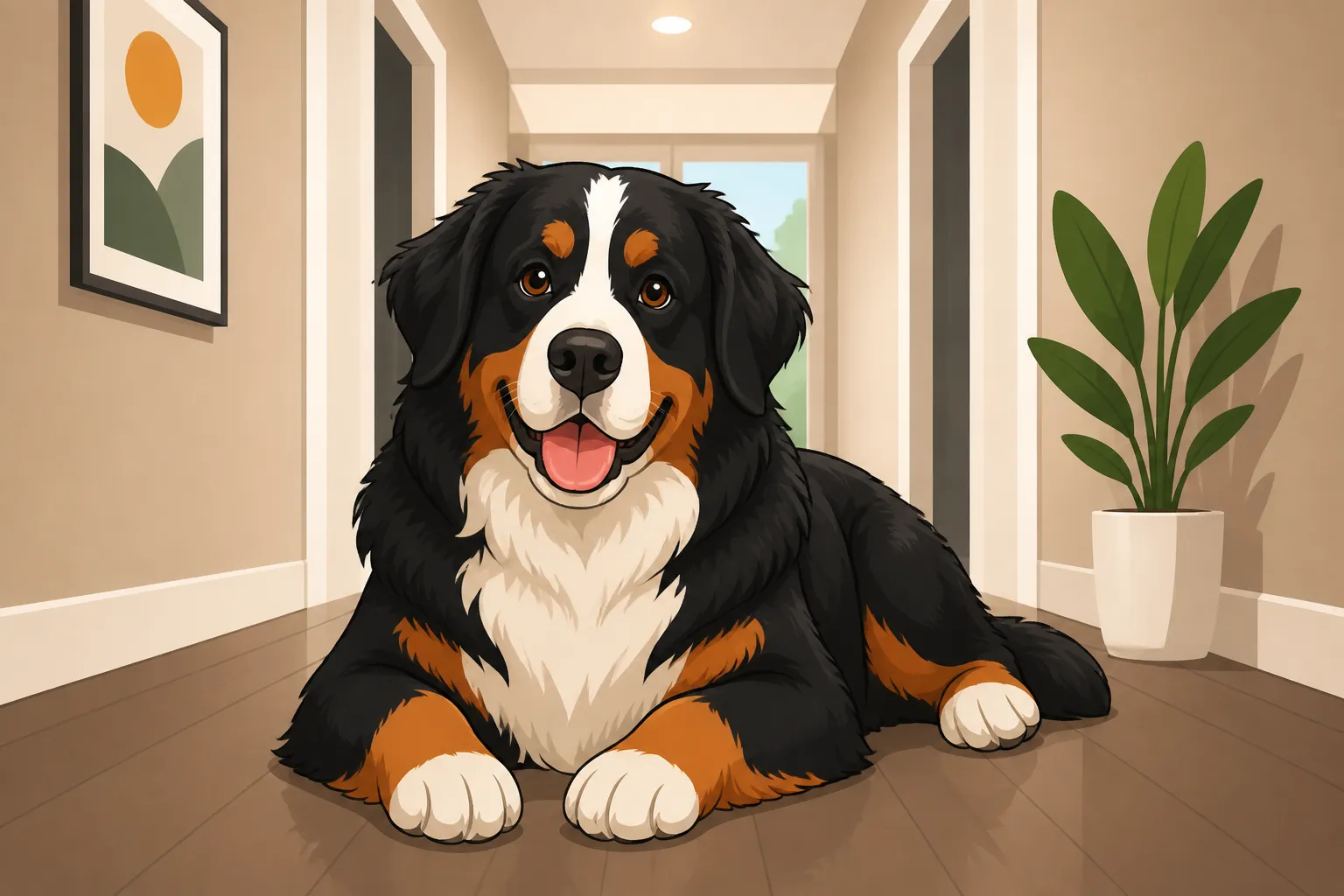
Ah, the classic Bernese Mountain Dog "hallway park"! If you're a Berner parent, you've undoubtedly experienced that moment: you're trying to navigate from the kitchen to the living room, perhaps with a basket of laundry or a fresh cup of coffee, only to find a majestic, tri-colored mountain of fluff completely occupying the narrowest part of your home. It’s not just an inconvenience; it can feel like a comical, yet very real, architectural challenge in your own house. This guide is here to unravel the mystery of why your gentle giant transforms into a immovable fixture in your most trafficked thoroughfares and, more importantly, how you can gently encourage them to find more considerate lounging spots without hurting their feelings (or your shins).
Understanding the "Berner Park" Phenomenon
Before we can solve the riddle of the hallway blockade, we need to understand the beautiful, sometimes perplexing, mind of a Bernese Mountain Dog. Their tendencies to "park" in doorways and hallways aren't malicious, and they're certainly not trying to trip you. Instead, these behaviors are usually rooted in a mix of instinct, comfort, and their deep-seated desire to be an integral part of your family's daily life.
Their Instinct for Being Near You
Bernese Mountain Dogs are, at their core, companion animals. They thrive on proximity to their human family members. This isn't just about cuddles on the couch (though they love those too!), but a fundamental part of their breed's temperament. They want to be where the action is, where you are, and where they can keep an eye on everything. This often means strategically placing themselves in high-traffic areas, like the hallway, so they don't miss a beat. They might be trying to fulfill a subtle, ancestral desire to be aware of their "flock's" movements, even if that flock is just you heading to the bathroom. You might notice your Berner follows you from room to room, a constant, furry shadow. This isn't clinginess in an unhealthy sense, but a manifestation of their strong bond. It’s part of why they often earn the nickname “velcro dog.”
Imagine a Berner in their original Swiss farm environment. They weren't just decorative; they were working dogs, always in tune with the family's activities, whether it was drafting carts, herding livestock, or simply being present for protection. That deep-seated need to be involved and observant translates into their modern home life. When they settle in a hallway, it's often because it offers a prime vantage point for watching family members move between rooms, hearing conversations, and generally participating in the household rhythm. They might not be actively "guarding" in an aggressive way, but their presence is a quiet, reassuring anchor. It's simply who they are, this wonderful trait that makes them so loyal, but also sometimes prone to becoming a giant, furry obstacle. The Shadow a Bernese Mountain Dog Becomes Indoors delves deeper into this inherent desire for proximity.
The Comfort of a Cool Spot
Let's be honest: Bernese Mountain Dogs have a lot of fur. Their thick, luxurious double coats, while beautiful, are designed for the chilly Swiss Alps, not necessarily for a cozy, heated American home. This means they are often seeking out the coolest spots they can find. What's often cooler than carpet or hardwood floors? Tiles, linoleum, or even bare concrete in a basement or mudroom. And where are these cooler surfaces often found? You guessed it – kitchens, entryways, and, yes, hallways.
When your Berner sprawls out on the cool tiles of your hallway, they're not just being inconvenient; they're managing their body temperature. It's a physiological need for them. A Berner can overheat quite easily, especially in warmer climates or during summer months. Heat and the Bernese Mountain Dog's Black Coat explains just how susceptible they are to temperature extremes. So, that seemingly random spot in the hallway might actually be the most comfortable place in the house for them at that moment. They're just trying to chill out, literally. Sometimes, their quest for a cool spot even extends to lying right in front of a draft from a window or an air vent. Providing alternatives like cooling mats or strategically placed tile rugs can sometimes redirect this behavior, but the hallway remains a natural choice for many.
Observing Their Environment
Bernese Mountain Dogs are intelligent and observant creatures. They like to know what's going on around them. A hallway often serves as a central artery in a home, connecting various rooms. By parking themselves there, they have a panoramic view (or at least a good audio feed) of everything happening. From that vantage point, they can watch you cook in the kitchen, see the kids playing in the living room, and hear anyone approaching the front door.
This observational behavior isn't about being nosey; it's about feeling secure and involved. They want to be aware of their surroundings and your movements. If your Berner is particularly sensitive or prone to a bit of shyness, observing from a central, seemingly safe spot can make them feel more comfortable and in control of their environment. It’s their way of keeping tabs on their world. Think of it as their personal command center. They're not trying to be obstructive, but rather, they're simply choosing a spot that gives them maximum sensory input, allowing them to feel connected and engaged with the household happenings. It's a subtle form of environmental enrichment for them, even if it’s a pain for you!
Practical Strategies for Navigating the "Berner Blockade"
Alright, so we understand why they do it. Now, how do we gently encourage our lovable land sharks to find a less obstructive resting spot without causing them distress? It's all about positive reinforcement, consistency, and offering appealing alternatives. You'll need patience, as Berners, while smart, can also be quite deliberate in their actions.
Teaching a "Place" or "Settle" Command
One of the most effective ways to manage a hallway-hogging Berner is to teach them a reliable "place" or "settle" command. This involves training your dog to go to a specific designated spot (like a bed, mat, or crate) and stay there until released. This isn't about punishment; it's about teaching them an alternative, desirable behavior.
Start in a quiet environment with high-value treats. Lure your Berner onto their designated "place" (a comfy, large dog bed is ideal). As soon as they step onto it, mark the behavior with a verbal cue like "yes!" or a clicker, and reward them. Repeat this many times. Once they understand going to the spot, start adding the "stay" aspect. Gradually increase the duration they stay on their place, and then the distance you move away. Practice in various rooms, and eventually, near a hallway. When they're blocking the hallway, you can calmly give the "place" command, guiding them to their bed.
Consistency is key here. Everyone in the household needs to use the same command and expectations. Resources like BAXTER & Bella's online puppy school or their advanced training guides often cover "place" training in detail, offering step-by-step instructions that cater to large, intelligent breeds like Berners. This command isn't just for hallways; it's invaluable for managing greetings at the door, meal times, or when you simply need your dog to be out of the way for a moment. Don't forget that How Long a Bernese Mountain Dog Will Concentrate is often shorter than you'd think, so keep training sessions brief and positive.
Managing Space with Gates and Crates
Sometimes, proactive management is the best solution, especially for younger Berners or those who are still learning. Physical barriers can be incredibly helpful in keeping certain areas clear or in providing your Berner with a secure, designated space.
- Dog Gates: Large, sturdy dog gates can be installed in doorways or hallways to temporarily restrict access. This is particularly useful if you need to carry something fragile or if you have guests who might not be comfortable stepping over a large dog. There are many options available on platforms like Amazon, from pressure-mounted gates to hardware-mounted gates that can withstand a determined Berner lean. Ensure any gate you choose is tall enough for your Bernese Mountain Dog. A standard baby gate usually won't cut it for a full-grown Berner; they can often step right over them! Look for extra-tall or extra-wide gates specifically designed for large breeds.
- Crates: While some people view crates as confinement, for many dogs, a crate is a safe, cozy den. If your Berner is crate-trained, you can direct them to their crate when you need clear access. Ensure the crate is large enough for them to stand up, turn around, and lie down comfortably. Crates and Gates for a Bernese Mountain Dog offers more detailed advice on choosing the right size and type. Crates are also excellent for teaching independent relaxation, helping your Berner feel secure even when you’re not right next to them.
Using gates and crates isn't about isolating your dog; it's about creating structure and preventing undesirable behaviors while they're learning. They provide clear boundaries and can be especially useful during those adolescent phases where a Berner’s self-awareness of their size might be a little… underdeveloped.
Creating Designated "Parking Zones"
If your Berner is seeking a cool, central spot to observe, why not provide one that works for everyone? Think about areas that offer similar benefits to the hallway but are less obstructive.
- Cool Mats or Beds: Place orthopedic beds or cooling mats in corners of rooms where your Berner can still see the action but isn't directly in a thoroughfare. If you have tile or hardwood floors in another, less busy area, encourage them to use that spot with treats and praise. Cooling mats, easily found on Amazon or at pet stores, can be a game-changer for a heat-sensitive Berner looking for relief.
- Designated "Watch Zones": Perhaps a large dog bed under a window, or a corner of the living room with good visibility into other rooms. Lure them to these spots and reward them heavily when they choose to settle there. Make these areas irresistibly comfortable and inviting. Sometimes a quiet, out-of-the-way spot that still offers a good view can be their preferred choice once they realize it's an option.
- Training and Rewards: Whenever your Berner chooses a non-obstructive spot, lavish them with praise and a small treat. Positive reinforcement goes a long way in shaping their choices. If they are often found in the kitchen, perhaps a rug or mat near the kitchen island (but not directly in the path to the fridge!) could become their new favorite hang-out. This is a great way to use their natural inclination to be near you to your advantage.
| Behavior / Motivation | Problem in Hallway | Solution / Alternative |
|---|---|---|
| Desire for Proximity / Observation | Blocks foot traffic | Teach "place" command, create designated "watch zones" |
| Seeking Cool Surfaces | Sprawls on cool tile | Provide cooling mats, elevated beds, or tile in open areas |
| Comfort / Security | Feels safe in central spot | Crate training, comfy beds in low-traffic zones |
| Stubbornness / Indecision | Refuses to move | Consistent training, positive reinforcement, clear cues |
Addressing Underlying Behavioral Patterns
Beyond the immediate tactical solutions, addressing some deeper behavioral traits of the Bernese Mountain Dog can help prevent the hallway parking problem from becoming a recurring saga. Berners are a unique breed with their own set of endearing quirks.
Overcoming Stubbornness and Indecision
Let's face it, Bernese Mountain Dogs can be notoriously stubborn. It's not usually a defiance born of malice, but sometimes a mix of their deliberate nature and a touch of independent thought. When you ask them to move from their comfy hallway spot, they might give you a long, soulful look that seems to say, "Do I have to?" and then not budge an inch.
This isn't always stubbornness; sometimes it's indecision or simply a strong preference for their current comfort. They might genuinely need a moment to process your request and decide it's worth the effort. Gentle encouragement, rather than forceful commands, works best with Berners. If you pull or drag, they might The Bernese Mountain Dog That Sulks After a Telling Off, making future requests even harder. Instead, use a happy, inviting tone, perhaps with a treat as a lure, to encourage them to move.
Consistency and patience are vital. If you always follow through with your request (even if it takes a minute), they will learn that "move" or "place" means move. Avoid repeating commands endlessly if they're not responding. Instead, get their attention, give the command once, and then guide them with a lure or a gentle hand on their collar if needed, always rewarding the desired action. Remember, Whether a Bernese Mountain Dog Is Stubborn is a common question, and the answer often lies in their deliberate nature rather than true defiance.
Encouraging Independent Relaxation
While Berners love being close, it's also healthy for them to learn to relax independently, even when you're in another room. If your Berner feels the constant need to be in the "control center" (i.e., the hallway) to monitor your movements, it might be a sign that they could benefit from more independent relaxation training.
This ties back to the "place" command. Teach them that their designated bed or mat is a wonderful place to be, even if you're not sitting right next to them. Start with short durations, rewarding them for staying. Gradually extend the time, and then start moving into another room for a few minutes while they remain on their place. Use calm, soothing tones. You can also provide long-lasting chews or puzzle toys when they are on their place, making it an enjoyable experience. Teaching a Bernese Mountain Dog to Settle is a crucial life skill that benefits both dog and owner. This helps reduce their need to follow your every step, thus lessening the likelihood of them parking in your path.
Consistency is Key
I can't stress this enough: consistency is the bedrock of successful training with any dog, especially a large, intelligent breed like the Bernese Mountain Dog. If one day you allow them to lie in the hallway because you're in a hurry, and the next day you try to shoo them away, they will get confused. They learn quickly through patterns, so inconsistent behavior from you creates unclear expectations for them.
Every family member needs to be on the same page regarding rules and commands. If "place" means go to your bed, it always means go to your bed. If they're not allowed to block the hallway, then every time they block the hallway, they should be redirected to an appropriate spot. This doesn't mean being harsh, but being firm and consistent in your expectations. A calm, matter-of-fact approach, reinforced with positive rewards, will yield the best results over time. It's a long game, not a sprint, when you're working with a Bernese Mountain Dog's unique personality. Think about how The Bernese Mountain Dog That Leans on Everyone requires a consistent response to manage their affectionate, yet sometimes overwhelming, behavior.
Ultimately, living with a Bernese Mountain Dog means embracing their charming quirks, even the ones that temporarily turn your hallway into a furry roadblock. With understanding, patience, and consistent training, you can guide your majestic companion to more convenient (for you!) and comfortable (for them!) resting spots, ensuring a harmonious home for everyone.
Disclaimer
This article is for general informational purposes only and does not constitute professional advice. Laws, prices and regulations vary by location and change over time. Consult a qualified professional for guidance on your specific situation.