The Temperament Test a Therapy Bernese Mountain Dog Passes
It's a dream for many Bernese Mountain Dog owners to share their wonderful companions with others, especially those who could benefit from their gentle nature. However, the path to becoming a certified therapy dog involves more than just a sweet disposition; it requires a specific temperament and a solid foundation of training. This guide will walk you through the essential qualities and tests a Bernese Mountain Dog must pass to become a beloved therapy dog, addressing the unique challenges and triumphs of this journey.
Understanding the Core Traits of a Therapy Dog
Becoming a therapy dog isn't just about being friendly; it's about possessing a steadfast, unflappable demeanor that can bring comfort and calm in unpredictable environments. For a Bernese Mountain Dog, whose natural inclination is often towards gentleness, this can be a very achievable goal, but it still requires careful nurturing and specific training. We're looking for a dog that consistently offers a stable and comforting presence, even when faced with unusual sights, sounds, or interactions.
The Innate Gentle Nature of the Bernese Mountain Dog
Bernese Mountain Dogs are renowned for their calm, affectionate, and good-natured temperament. They often possess an inherent desire to be close to their people, often leaning into them with their substantial bodies – a characteristic many find endearing. This leaning behavior, which can be seen as a way of connecting, translates beautifully into the role of a therapy dog, where physical touch and close proximity are often key to providing comfort. Their natural patience, particularly with children and the elderly, makes them excellent candidates, as they tend to absorb energy rather than amplify it. They rarely seek confrontation and generally prefer peace, making them highly suitable for environments like hospitals or nursing homes where a serene presence is paramount.
However, it's crucial to understand that "gentle" doesn't automatically mean "therapy dog ready." While the foundation is there, it needs to be honed. A Bernese Mountain Dog might be wonderfully gentle with family, but how do they react to a sudden loud noise, a person using a walker, or an unexpected touch from a stranger? The innate gentleness is a phenomenal starting point, but it's only the first step. You'll need to recognize these natural tendencies and build upon them with controlled experiences and consistent positive reinforcement. This gentle foundation is often why many owners consider Whether a Bernese Mountain Dog Makes a Therapy Dog in the first place.
Essential Foundational Obedience Skills
Before even considering a temperament test, your Bernese Mountain Dog needs to have rock-solid basic obedience. This isn't just about looking good; it's about safety, control, and ensuring your dog can perform reliably under distraction. Commands like "sit," "stay," "down," "come," and "leave it" are non-negotiable. Imagine being in a busy hospital corridor or a classroom where your dog needs to respond instantly despite chaos around them. A shaky "sit" or a "stay" that dissolves the moment you take a step away simply won't cut it. Your dog must be able to hold these positions for extended periods, even when curious hands reach out or unexpected sounds echo through a room.
Beyond the basic commands, excellent leash manners are absolutely critical. A Bernese Mountain Dog can weigh over a hundred pounds, and pulling on the leash, even slightly, can be a major safety hazard for vulnerable individuals. They need to walk politely by your side, responding to subtle cues rather than brute force. Leash Manners on a Hundred Pound Bernese Mountain Dog are paramount, as a therapy dog must navigate tight spaces, walk past equipment, and weave through people without causing any issues. Training should focus on positive reinforcement, patience, and repetition, recognizing that a Bernese can be sensitive to harsh corrections. If you're struggling with consistent obedience, consider structured online programs like those offered by BAXTER & Bella, which can provide a comprehensive framework for building these essential skills from the ground up, all from the comfort of your home.
Key Areas Tested in a Therapy Dog Evaluation
Therapy dog organizations, like Alliance of Therapy Dogs or Pet Partners, have specific criteria to ensure dogs are safe, reliable, and effective in their roles. These tests are designed to simulate real-world therapy scenarios, often pushing a dog slightly outside their comfort zone to see how they truly react. It's not about perfection, but about consistent, appropriate responses.
Calmness and Handling Strange Situations
One of the most challenging aspects for many dogs, even calm Berners, is encountering strange situations. A therapy dog might meet someone in a wheelchair, on crutches, wearing unusual hats, or moving erratically. The dog needs to remain calm, show no fear, and ideally, show a gentle curiosity or indifference. They should not bark, lunge, or shy away. Imagine your Bernese walking into a room with a loudly beeping medical machine or a sudden loud cough from a patient. The test will often include staged scenarios like dropping crutches, simulating a person falling, or having someone approach with an odd gait.
A therapy Bernese needs to demonstrate a remarkable ability to recover quickly from any startling event. If they flinch at a dropped item, they should immediately look to their handler for reassurance and then settle back into their calm state. They also need to be comfortable with various types of handling by strangers – soft pets, clumsy pats, or even someone accidentally stepping on a paw. They must exhibit no aggression, no fear-biting, and no extreme discomfort. This level of stoicism requires not just inherent temperament but also extensive desensitization and positive exposure to a wide array of stimuli. It's about building a dog that can stay grounded in what might feel like a chaotic world to them.
Tolerance of Unfamiliar People and Distractions
A therapy dog's primary job is to interact positively with people from all walks of life. This means they cannot be overly shy, nervous, or aloof. While a Bernese Mountain Dog might have a reputation for being somewhat reserved with strangers initially, a therapy dog needs to quickly warm up or, at the very least, be entirely comfortable with new introductions. The tests will assess how your dog reacts to multiple strangers at once, to being petted by several people simultaneously, and to being ignored by people. This ensures they don't demand attention but are gracious when it's offered. What the Standard Means by an Aloof Bernese Mountain Dog provides useful context for understanding the breed's natural tendencies in this area.
Distractions are another huge component. Therapy environments are rarely quiet. There will be other dogs, people talking loudly, alarms, dropped items, strong smells, and tempting discarded food. Your Bernese must be able to maintain focus on you and their task without becoming overly agitated or distracted. The test might involve other dogs walking nearby, people tossing balls, or loud noises just outside the room. The dog should not try to play with other dogs, chase moving objects, or scavenge for food. Their focus should remain on their handler, and they should be able to calmly perform their duties. This takes immense training and proofing in varied environments to build that reliable focus and self-control.
Preparing Your Bernese Mountain Dog for the Test
The journey to becoming a therapy dog is a marathon, not a sprint. It requires dedication, consistent effort, and a deep understanding of your Bernese Mountain Dog's personality and limits. It's about systematically building confidence and reinforcing desired behaviors over time.
Gradual Socialization and Exposure
The single most important preparation for a therapy dog is comprehensive and positive socialization. This isn't just taking your Bernese puppy to a puppy class; it's a lifelong commitment to exposing them to new sights, sounds, people, and experiences in a controlled, positive way. Start young with Socializing a Reserved Bernese Mountain Dog Puppy, introducing them to different types of people: young and old, people with hats, glasses, beards, and varying gaits. Introduce them to different objects: wheelchairs, walkers, crutches, strollers, umbrellas. The goal is to make these things mundane, not scary or exciting. Always ensure these experiences are positive, pairing new encounters with high-value treats or praise.
Exposure to different environments is also key. Visit pet-friendly stores, parks, quiet street corners, and even the waiting room of your vet (if they allow non-appointment visits for socialization). The more experiences your Bernese has in a safe, positive manner, the more confident and unflappable they will become. This also includes exposing them to the presence of other calm dogs, without allowing overly boisterous interactions. The aim is for them to learn that new things are generally safe and often lead to good outcomes. Remember, a Bernese can be sensitive, so Training a Bernese Mountain Dog Without Breaking It means making every new experience a positive one, never forcing them into situations that cause distress.
Reinforcing Obedience and Confidence
Beyond socialization, constant reinforcement of obedience is vital. Practice those basic commands daily, not just in your living room, but in increasingly distracting environments. Take your Bernese to a park when children are playing, or near a busy street, and practice their "sit" and "stay." Teach them Teaching a Bernese Mountain Dog to Settle on a mat or bed, even when things are happening around them. This helps build their ability to switch off and relax on command, which is essential in a therapy setting. Consider investing in a good quality long line (available on Amazon) to practice reliable recalls in open, distracting areas, ensuring they'll come back to you even when curious.
Confidence is another critical factor. A fearful dog makes a poor therapy dog. Build your Bernese's confidence through positive reinforcement, trick training, and even gentle confidence-building games. Praise them generously for making good choices, and don't punish them for mistakes; redirect and re-teach. The more confident your dog is in themselves and in your leadership, the better they will handle novel situations. A dog that looks to you for guidance and trusts you will be much more successful in navigating the uncertainties of therapy work. This kind of consistent positive reinforcement also strengthens the bond between you, which is the cornerstone of effective therapy partnerships.
What to Expect During the Evaluation
Walking into a therapy dog evaluation can feel nerve-wracking for the human, but remembering that it's a test of your dog's temperament and your partnership, not just their obedience, can help. The evaluators are looking for a naturally calm, predictable dog who enjoys interactions and isn't easily startled.
Common Scenarios and Stressors
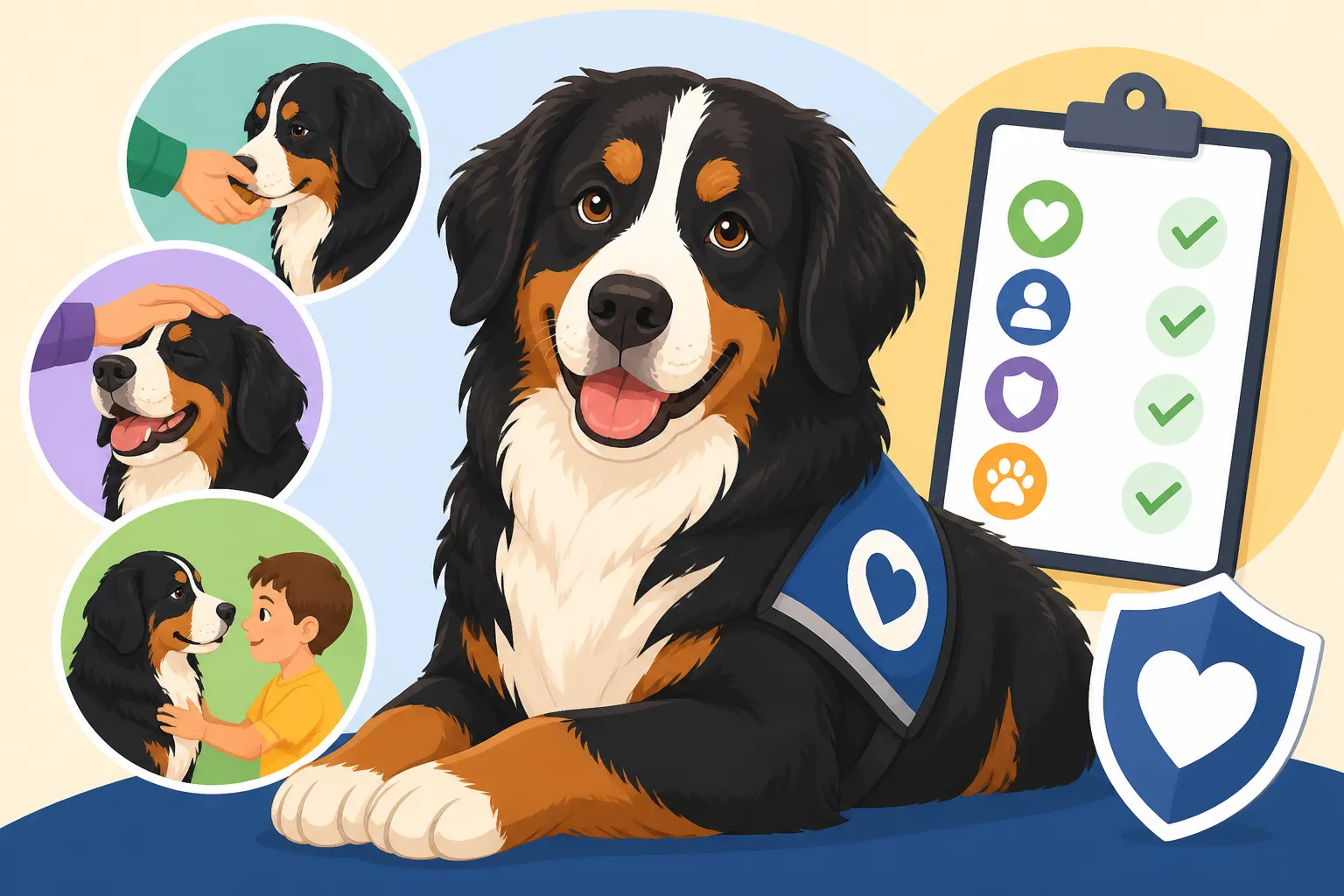
The evaluation will typically involve a series of stations or scenarios designed to gauge your Bernese's reaction to common therapy situations. Expect to encounter:
- Crowded Environments: Walking through a group of people, some moving, some sitting, some talking loudly.
- Unusual Equipment: Being calmly approached by someone in a wheelchair, using crutches, or with an oxygen tank.
- Unfamiliar Handling: A stranger might reach out to pet your dog clumsily, touch their paws, or gently pull an ear or tail (within reason, never harshly).
- Startling Noises: Objects being dropped unexpectedly, loud coughing, or sudden bursts of laughter.
- Disruptive Movement: People moving suddenly, running, or playing nearby.
- Food Refusal: Your dog will likely be offered a tempting treat by a stranger, which they should ignore or gently take only with your permission (a good "leave it" command is key here).
- Separation/Alone Time: In some tests, you might be asked to leave your dog briefly with a stranger to see how they cope. A dog that suffers from The Bernese Mountain Dog That Cannot Bear Being Left would struggle significantly here.
The key is for your Bernese to remain calm, unreactive, and look to you for direction. They should recover quickly from any startle, without showing aggression, fear, or excessive shyness. For example, if a child suddenly runs past, your Bernese should not chase, but instead calmly watch and then refocus on you or the task at hand. This is where consistent training and socialization truly pay off.
The Role of the Handler
As the handler, your role during the temperament test is absolutely crucial. You are your Bernese Mountain Dog's anchor, their guide, and their source of reassurance. Evaluators are not just watching the dog; they are watching you too. You need to demonstrate calm, confident handling, clear communication, and an ability to read your dog's body language. If your Bernese seems slightly unsure, a calm voice, a gentle pat, or a simple cue from you should be enough to help them through it. Remember, this is a team effort. You shouldn't be overly nervous, as your stress can easily transfer to your dog.
It's also important to advocate for your dog if a scenario feels genuinely unsafe or overly stressful for them. While the tests are designed to be challenging, they should never be traumatic. You should be prepared to intervene if necessary, though ideally, your dog's training will prevent any need for intervention. The test is a measure of your Bernese's inherent kindness and composure, combined with your diligent training and empathetic understanding of your wonderful companion. With patience and proper preparation, your Berner can indeed bring comfort and joy to many as a certified therapy dog.
Here's a quick look at some key traits for a therapy Bernese Mountain Dog:
| Trait Category | Desired Behavior | Why It Matters |
|---|---|---|
| Temperament | Calm, gentle, friendly, adaptable | Essential for comforting vulnerable individuals. |
| Confidence | Unflappable, recovers quickly from surprises | Handles unexpected noises/movements without fear or aggression. |
| Obedience | Reliable "sit," "stay," "come," "leave it" | Ensures safety and control in diverse environments. |
| Socialization | Comfortable with strangers (all ages/abilities) | Positive interactions are the core of therapy work. |
| Tolerance | Accepts varied handling, unusual equipment | Endures clumsy pets, wheelchairs, medical devices. |
| Focus | Attentive to handler, ignores most distractions | Stays on task despite other dogs, food, or noise. |
| Patience | Can remain still for periods, waits politely | Allows for slow, gentle interactions and prolonged visits. |
A Bernese Mountain Dog Around Children and Teaching Strangers How to Greet a Bernese Mountain Dog are also important areas to consider for therapy work, as many settings involve interaction with varied populations. When you put in the effort, a Bernese Mountain Dog's loving spirit truly shines, making them exceptional candidates for bringing smiles and solace to those who need it most.
Disclaimer
This article is for general informational purposes only and does not constitute professional advice. Laws, prices and regulations vary by location and change over time. Consult a qualified professional for guidance on your specific situation.