Road Salt Caught in a Bernese Mountain Dog’s Feathering
The beautiful, flowing feathering on a Bernese Mountain Dog's legs and paws is one of their most striking features, but it can quickly become a magnet for road salt and de-icing chemicals during winter walks. This isn't just an aesthetic problem; these abrasive, corrosive substances can cause painful irritation, chemical burns, and even serious health issues if ingested, making winter walks a real worry for many Berner owners. This guide will walk you through understanding the dangers of road salt, practical prevention strategies, and how to effectively clean your Bernese Mountain Dog's paws and feathering after every walk to keep them happy and healthy all winter long.
Understanding the Hidden Dangers of Road Salt for Your Berner
It’s easy to dismiss a bit of salt on the sidewalk as just part of winter, but for a Bernese Mountain Dog, with their glorious long coat and sensitive paws, it's a genuine threat. The substances used to melt ice and snow on our roads and pathways are far from benign. They are chemical compounds designed to break down frozen water, and in doing so, they can be incredibly harsh on exposed skin and fur.
The Abrasive and Corrosive Nature of De-Icers
Think about how road salt feels on your own skin if you get some on an open cut – it stings, right? Now imagine that sensation all over your dog's paw pads, or worse, caught deep within the delicate skin covered by their feathering. Road salt is primarily sodium chloride, but many commercial de-icers contain other chemicals like magnesium chloride, calcium chloride, and even potassium acetate. These aren't just irritating; they are highly abrasive and corrosive. They can dry out paw pads, leading to cracking and bleeding, and they can cause chemical burns on sensitive skin. The long hair on a Bernese Mountain Dog's legs and between their toes acts like a sponge, soaking up and holding onto these chemicals, pressing them against the skin and magnifying the potential for damage.
Beyond the immediate irritation, imagine your Berner settling down for a post-walk nap, meticulously licking their paws clean. This natural grooming instinct, usually a good thing, turns into a hazard when their fur is coated in de-icers. Ingesting these chemicals, even in small amounts over time, can lead to gastrointestinal upset, vomiting, diarrhea, and in more severe cases, electrolyte imbalances and kidney damage. It's a double-edged sword: the very act of trying to clean themselves can make them sick.
Why Feathering is a Road Salt Magnet
The stunning "trousers" on a Bernese Mountain Dog's hind legs and the longer hair on their front legs and feet are a hallmark of the breed, a beautiful remnant of their heritage as mountain dogs. However, this magnificent coat, while offering some insulation, becomes a significant liability when navigating salt-treated areas. Unlike dogs with shorter coats, a Berner's feathering easily picks up snow, ice, and every speck of grit and chemical it comes into contact with. This isn't just about superficial dirt; the structure of the long hair traps these particles, holding them tight against the skin.
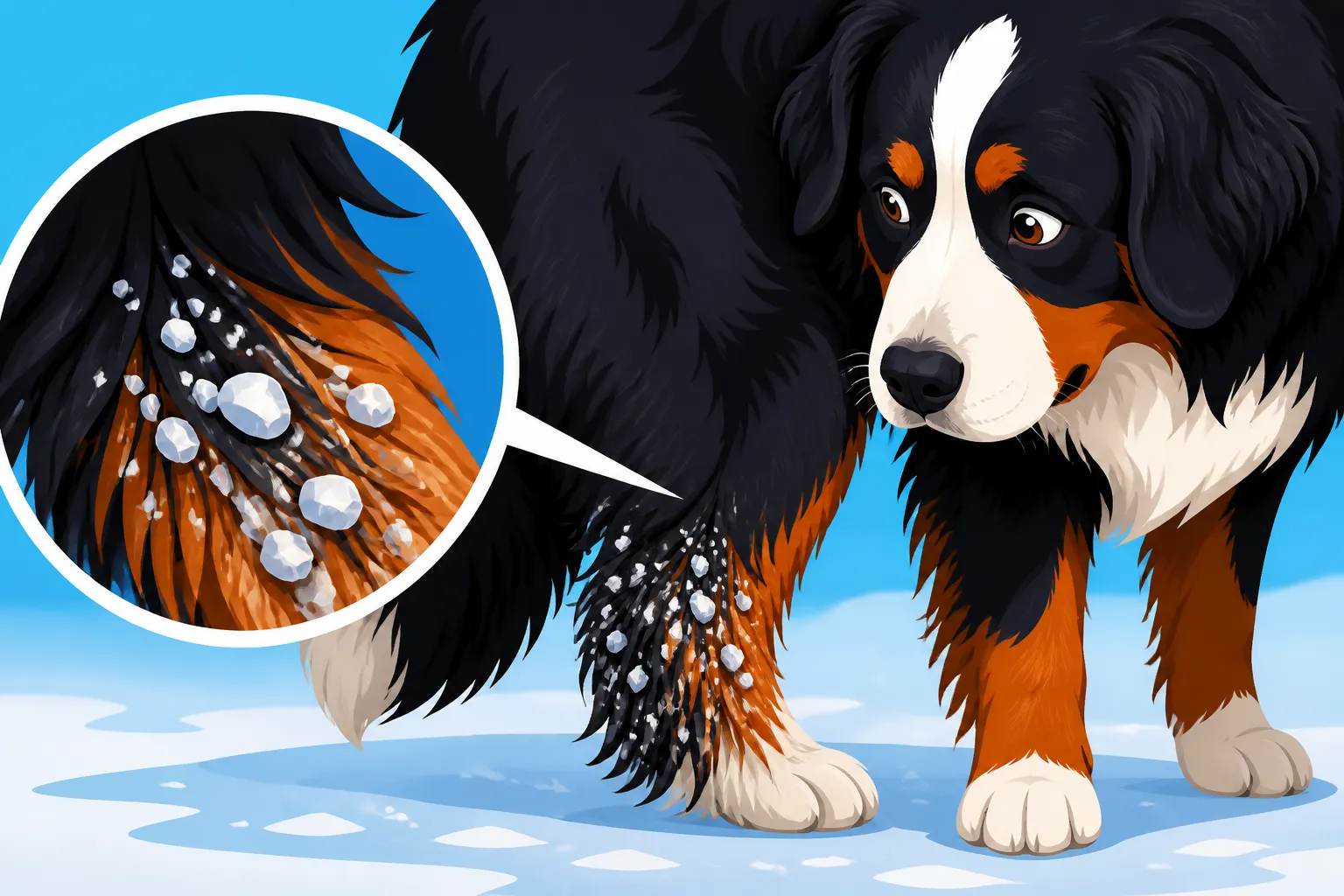
When snow and ice accumulate, they can form painful "snowballs" in the feathering, which often contain embedded salt crystals. These frozen clumps pull at the skin, cause discomfort, and, if left unchecked, can lead to frostbite in extreme cold. The feathering also creates a larger surface area for chemicals to adhere to, turning a quick trot down a salted path into a prolonged exposure event. Owners often focus on paw pads, but the entire lower leg, up to the hock and elbow, can be affected due to the extensive feathering. The Feathering on a Bernese Mountain Dog's Legs is truly a marvel, but it demands extra vigilance in winter.
Proactive Protection: Shielding Your Berner's Paws Before the Walk
Knowing the risks is the first step, but preventing the problem is where proactive care truly shines. You can't always avoid salted pavements, especially in urban or suburban areas, but you can create a barrier between those harsh chemicals and your Bernese Mountain Dog's sensitive skin. This requires a bit of pre-planning and consistency, but it's well worth the effort for your Berner's comfort and health.
The Great Debate: Booties vs. Balms
When it comes to paw protection, most Berner owners find themselves weighing the pros and cons of booties against paw balms. Both have their place, but what works best can depend on your dog, your environment, and even how long your walks typically last.
Paw Booties:
Booties offer the most comprehensive physical barrier against road salt, ice, and anything else the winter ground might throw at your Berner's paws. If fitted correctly, they cover the paw pads and extend up the leg, protecting a significant portion of the lower feathering. Many brands, which you can find on platforms like Chewy or Amazon, offer robust, waterproof options that truly shield your dog. They are fantastic for long walks in heavily salted areas, deep snow, or when temperatures are particularly brutal. They also prevent snow from balling up between the toes, a common discomfort for long-haired breeds. Snow Balling Up in a Bernese Mountain Dog's Coat is a related winter woe that booties can help mitigate.
However, getting a Bernese Mountain Dog to accept booties can be a process. Their large, sturdy paws need a specific fit, and a poorly fitting bootie can rub, cause discomfort, or simply fall off. Many Berners find them awkward at first, leading to comical "bootie dances" or outright refusal. Patience, positive reinforcement, and gradual introduction are key. Start with short wear times indoors, offering high-value treats, and slowly increase the duration. Some owners find the hassle of putting them on and taking them off, especially with a wiggly Berner, to be a deterrent for quick trips outside.
Paw Balms and Waxes:
Paw balms, often made with natural ingredients like beeswax, shea butter, and various oils, provide a protective layer that moisturizes the paw pads and creates a semi-permeable barrier against irritants. They are much easier to apply than booties – simply rub a generous amount onto the paw pads and work it into the fur between the toes and on the lower feathering before heading out. This barrier helps prevent salt and chemicals from directly contacting the skin, and it makes cleaning much easier afterward. It also offers some protection against dryness and cracking caused by cold weather. You can find excellent quality paw balms from many pet supply retailers on Chewy or Amazon.
While balms are great for moderate conditions and quick trips, they don't offer the same level of physical protection as booties against sharp ice, deep snow, or extremely heavy salt concentrations. They need to be reapplied regularly, sometimes before every outing, to maintain effectiveness. The biggest advantage, though, is their ease of use and the fact that most Berners tolerate them without issue, often enjoying the gentle paw massage during application.
Here's a quick comparison:
| Feature | Paw Booties | Paw Balms/Waxes |
|---|---|---|
| Protection Level | High (physical barrier against salt, ice, sharp objects) | Moderate (protective layer, moisturizes) |
| Application Ease | Can be challenging, requires training & proper fit | Very easy, quick rub-on |
| Coverage | Paw pads, often extends up lower leg/feathering | Primarily paw pads and fur between toes/lower feathering |
| Comfort | Can be awkward initially, may rub if ill-fitting | Generally well-tolerated, soothing |
| Durability | Varies by brand, can wear out or be lost | Needs reapplication, wears off with activity |
| Cost | Higher initial cost | Lower cost, but frequent use adds up |
| Best For | Heavy snow, ice, long walks, extreme cold, sharp surfaces | Moderate conditions, short walks, moisturizing |
Ultimately, you might find a combination works best – booties for serious winter adventures and balm for shorter potty breaks or when the conditions aren't quite as harsh.
Strategic Route Planning and Trimming
Beyond products, smart planning can significantly reduce your Berner's exposure to road salt. If you have the option, choose walking routes that prioritize natural surfaces like grassy areas, parks, or unpaved trails over heavily salted sidewalks and roads. Even a slight detour to stick to a less-treated path can make a big difference for your dog's paws and coat.
Regular grooming is also a powerful preventive measure. Keeping the hair between your Bernese Mountain Dog's paw pads trimmed short is crucial. This helps prevent ice balls, salt, and debris from getting trapped and causing discomfort or infection. It also makes cleaning much easier. You can gently trim this hair with blunt-nosed scissors or a small electric trimmer, taking care not to nick the delicate skin. Similarly, while you wouldn't shave your Berner's feathering entirely, Tidying the Hair Around a Bernese Mountain Dog's Feet to prevent it from dragging excessively on the ground can reduce the amount of salt and grime it collects. This focused trimming around the paws and lower legs doesn't impact their natural insulation but greatly aids in cleanliness and comfort.
The Essential Post-Walk Decontamination Routine
No matter how many precautions you take, some road salt is bound to find its way onto your Bernese Mountain Dog after a winter walk. The key is to have a consistent, efficient post-walk routine to remove it immediately. This isn't just about cleanliness; it's about protecting their skin from prolonged chemical exposure and preventing them from ingesting harmful substances.
Immediate Rinse and Wipe Down
The moment you step back inside, the clock starts ticking. Don't let your Berner wander through the house, tracking salt and melting snow, and certainly don't let them settle down to lick their paws before you've cleaned them. Have a dedicated "paw station" right by the door. This might include a shallow basin of warm water, a spray bottle, soft towels, and perhaps a specialized paw washer.
For a Bernese Mountain Dog, a simple bowl might not be enough due to their size and the extent of their feathering. A dedicated paw washer, available from retailers like Chewy or Amazon, can be a game-changer. These devices typically consist of a cup with silicone bristles inside, allowing you to dunk a paw, twist gently, and effectively clean all sides of the paw and between the toes. Fill it with lukewarm water – never hot, as it can further irritate cold-exposed skin. If you don't have a paw washer, a spray bottle filled with warm water can work wonders for saturating the feathering and rinsing away salt particles before wiping.
Once rinsed, gently but thoroughly pat each paw and the lower legs dry with a clean, absorbent towel. Pay extra attention to the spaces between the toes and within the thick feathering, as lingering moisture can lead to skin irritation or even yeast infections. Skin and Ear Problems in a Bernese Mountain Dog can sometimes originate from dampness and irritation, so drying completely is paramount.
Specialized Tools and Products for Deep Cleaning
Sometimes, a quick rinse isn't enough, especially if your Berner has been romping through deep snow or slush. For stubborn salt residue or when you want to ensure a deeper clean, consider these tools and products:
- Soft Brush or Comb: After drying, a soft brush or wide-toothed comb can help remove any remaining dried salt crystals from the feathering. This is particularly useful for dislodging particles that cling to the long hairs. Brushing your Berner regularly is important anyway, and How Often a Bernese Mountain Dog Should Be Brushed is a question many new owners ask. Incorporating a paw and lower leg brush-out after winter walks simply extends that routine.
- Pet-Safe Wipes: Keep a stash of pet-safe cleansing wipes near the door. These are excellent for quick clean-ups when a full paw wash isn't necessary, or as a follow-up to ensure all residue is gone. Look for brands that are alcohol-free and specifically designed for pets, often containing soothing ingredients like aloe.
- Mild Pet Shampoo: If your Berner has been heavily exposed, or if you notice any persistent stickiness or irritation, a full bath of their lower legs and paws with a mild, moisturizing pet shampoo may be necessary. Focus on rinsing thoroughly, ensuring no shampoo residue is left behind, which could cause further irritation. Follow up with thorough drying. For general coat care, refer to Grooming a Bernese Mountain Dog's Long Tricolor Coat for more comprehensive advice.
Remember, consistency is key. Make this routine a positive experience with praise and perhaps a small treat, so your Berner associates the cleaning with something good.
Addressing Sore Paws and Irritated Feathering
Despite your best efforts, sometimes road salt manages to cause irritation or injury. Recognizing the signs early and knowing how to respond is crucial to your Bernese Mountain Dog's comfort and health. It’s important to treat any symptoms promptly to prevent them from escalating into more serious issues.
Recognizing the Signs of Irritation
Your Bernese Mountain Dog can't tell you in words that their paws hurt, but they'll certainly communicate it through their behavior. Keep an eye out for these tell-tale signs:
- Excessive Licking or Chewing: This is often the first indicator. If your Berner is constantly licking, chewing, or even gnawing at their paws and lower legs after a walk, it's a strong signal of discomfort. They might be trying to soothe an itch, alleviate pain, or remove an irritant.
- Redness and Swelling: Visually inspect their paw pads and the skin around their feathering. Any redness, inflammation, or swelling is a clear sign of irritation or a chemical burn. The skin might feel warm to the touch.
- Cracked or Bleeding Pads: Road salt and cold, dry air can quickly strip moisture from paw pads, making them brittle and prone to cracking. If you see visible cracks or small cuts, especially if they are bleeding, immediate attention is needed.
- Limping or Reluctance to Walk: If your Berner is limping, favoring a paw, or suddenly reluctant to go for walks in areas where they previously enjoyed them, pain from their paws could be the culprit. This is a more severe sign and warrants closer inspection.
- Changes in Hair or Skin Texture: Look for matted fur, areas where the feathering appears unusually stiff or crusty from dried salt, or patches of skin that seem dry, flaky, or discolored.
Home Remedies and When to See the Vet
For mild irritation, some home care can provide relief. After a thorough cleaning, apply a soothing, pet-safe paw balm or a thin layer of coconut oil to moisturize and protect the irritated skin. These natural remedies can help heal minor cracks and reduce dryness. You might also consider having your Berner wear soft dog socks for a short period indoors to prevent further licking while the skin heals. Ensure the socks are comfortable and don't restrict circulation.
However, it's vital to know when the situation calls for professional veterinary attention. If you observe any of the following, don't hesitate to contact your vet:
- Deep Cracks or Bleeding that Won't Stop: If the cuts are deep, actively bleeding, or show signs of infection (pus, strong odor).
- Severe Redness, Swelling, or Blistering: These could indicate significant chemical burns or a severe allergic reaction that requires medical intervention.
- Persistent Limping or Refusal to Bear Weight: This might mean a more serious injury or infection that needs diagnosis and treatment.
- Gastrointestinal Upset: If your Berner has ingested a significant amount of salt and is experiencing severe vomiting, diarrhea, lethargy, or loss of appetite, seek emergency vet care.
- Symptoms Worsen or Don't Improve: If home remedies aren't providing relief within a day or two, or if symptoms escalate, a vet visit is essential. Your vet can prescribe medicated creams, antibiotics if infection is present, or pain relief.
Remember, Bernese Mountain Dogs are generally stoic and may not always show extreme signs of discomfort until a problem is quite advanced. Regularly checking their paws, especially during winter, is a critical part of their overall care and can prevent small irritations from becoming big problems. Just like protecting them from Hot Pavement and a Bernese Mountain Dog's Pads in summer, winter paw care is non-negotiable for their well-being.
Disclaimer
This article is for general informational purposes only and does not constitute professional advice. Laws, prices and regulations vary by location and change over time. Consult a qualified professional for guidance on your specific situation.