Whether Bernese Mountain Dogs Still Work in Switzerland
Bernese Mountain Dogs still work in Switzerland, but not usually as everyday farm laborers in the way their ancestors did. Today, their work is more likely to involve carting demonstrations, farm life, community events, or therapy and companionship. This guide explains what “working” means for the breed now, which traditional jobs remain visible, and what a Berner needs to do them safely.
The work Bernese Mountain Dogs did on Swiss farms
From farm helper to all-purpose working dog
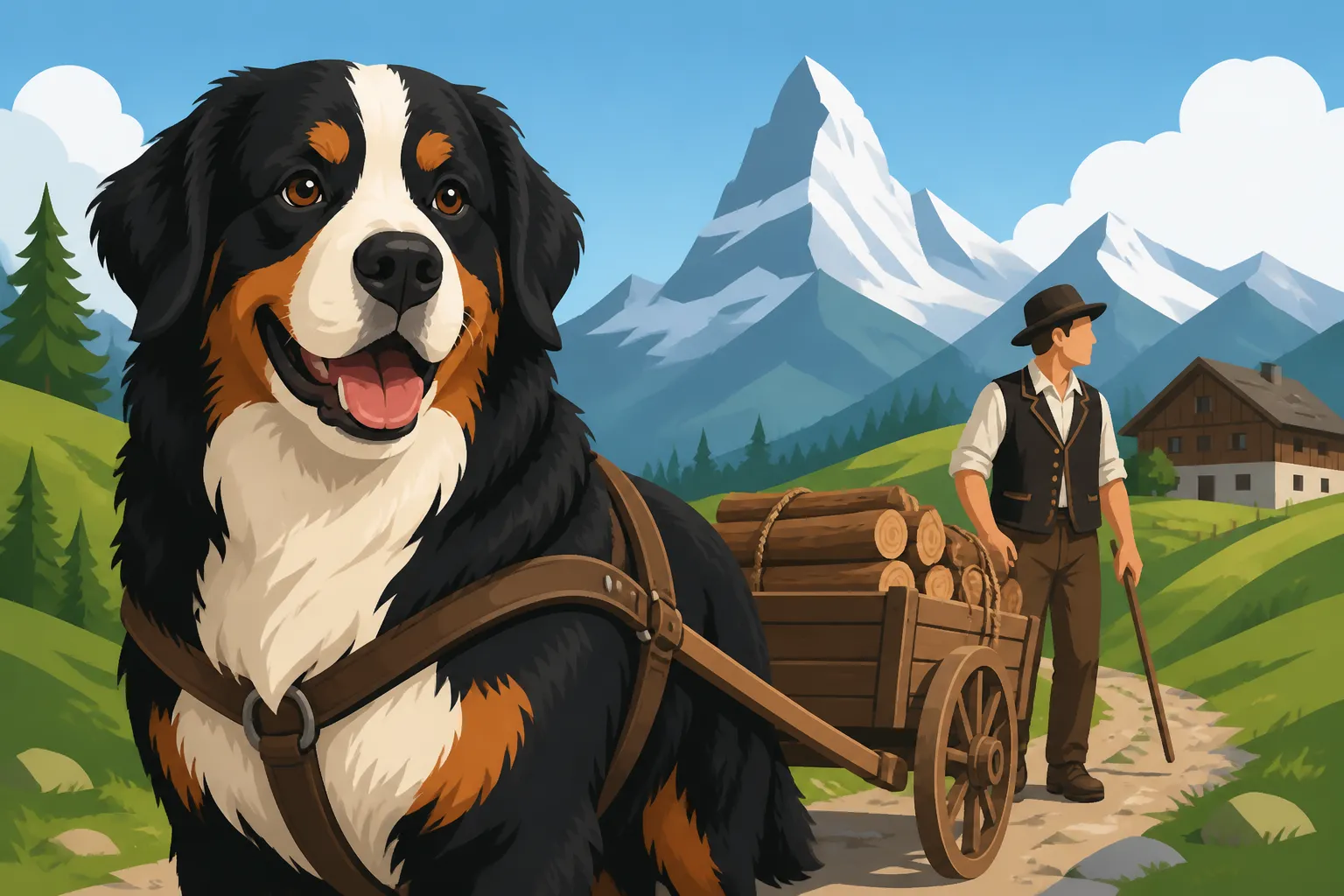
The Bernese Mountain Dog developed in the canton of Bern, where its ancestors lived and worked around farms. They were useful, adaptable dogs rather than specialists assigned to one narrow task. A dog might accompany its people, keep watch around the farm, help move livestock, or pull a small cart carrying goods.
That working background helps explain the breed’s sturdy frame and steady temperament. A Berner could be expected to travel alongside people and handle familiar activity around a busy farmyard. It does not mean every dog was a powerful draft animal or a trained livestock guardian. Individual dogs, farms, and tasks differed, and the breed’s farm role was practical rather than uniform.
The history of pulling milk and other goods is especially well known. A cart could help transport products from a farm toward a nearby village or market. This was useful work in its setting, but it should not be mistaken for evidence that a modern Berner can safely pull any load, at any age, over any distance. Training, equipment, fitness, terrain, and veterinary guidance all matter.
For more on those older tasks, see What Swiss Farmers Used Bernese Mountain Dogs For and The Milk Carts Bernese Mountain Dogs Pulled. The broader story of how the breed fitted into rural life is covered in What a Bernese Mountain Dog Did on a Swiss Farm.
Why the old jobs changed
Farm life in Switzerland changed as transportation, machinery, and work practices changed. When people no longer needed dogs to move goods or perform routine farm tasks, the practical demand for a cart-pulling farm dog naturally became smaller. Berners did not disappear from Swiss life; their role shifted as the lives of the people around them changed.
That shift is common for working breeds. A dog may retain the build, instincts, or enthusiasm associated with an older job even when the original job is no longer part of daily life. A Berner may enjoy learning to pull a cart, for instance, but that does not mean a family needs a cart or that the dog should be given a heavy workload.
The breed’s history is also easy to oversimplify. The Bernese Mountain Dog was one of several Swiss mountain dogs, each with its own size, coat, and working background. The Four Swiss Breeds Beside the Bernese Mountain Dog explains that wider context, while Cattle Droving and the Bernese Mountain Dog's Old Job looks more closely at the breed’s livestock-related work.
What Berners do in Switzerland today
Farm life, carting, and public demonstrations
Some Bernese Mountain Dogs still live on farms or take part in practical outdoor activities. Others are trained for carting as a hobby or demonstration. At an event, a Berner might pull a light cart along a controlled route, showing visitors a version of the breed’s historical draft work. This can be a meaningful way to connect the modern dog with its working heritage.
But a demonstration is not the same thing as routine commercial work. A dog pulling a lightly loaded cart for a short, supervised outing is in a very different situation from one expected to haul heavy goods over long distances. Responsible handlers treat the task as a trained activity, not as proof that the dog should be made to work harder.
A dog doing this kind of activity needs a properly fitted harness, gradual conditioning, clear cues, and a handler who can read signs of fatigue or discomfort. The cart must be stable and appropriate for the dog, and the route should suit its fitness and the weather. A specialist club or experienced instructor can help owners learn the basics; an ordinary walking harness is not automatically suitable for draft work.
Companion and community roles
For many modern Berners, the most important “work” is simply being a dependable companion. They may live in towns or rural areas, join their families on suitable outings, and take part in training or community activities. Some individuals are prepared for roles such as therapy visits, but the dog’s temperament and comfort matter more than its breed label. Not every Berner will enjoy busy public settings or close contact with unfamiliar people.
A calm-looking dog can still find a crowded venue tiring. New floors, carts, noise, children, and frequent approaches from strangers can add up. A responsible handler gives the dog room to rest, watches for signs of stress, and ends the activity if the dog seems uncomfortable. The goal is a positive experience for the animal, not a photo or performance.
In other settings, an individual Berner may be trained for a specific task, but it is best not to assume that the breed commonly fills a particular professional role in Switzerland. Training and suitability vary from dog to dog. A dog’s health, confidence, and willingness to participate should guide the choice of activity.
| Activity today | What it may involve | What responsible participation requires |
|---|---|---|
| Farm companionship | Spending time around people, animals, and outdoor routines | Safe introductions, supervision, and a suitable environment |
| Carting demonstrations | Pulling a light cart on a controlled route | Gradual training, fitted equipment, fitness, and rest |
| Therapy or community visits | Calm interaction in selected public settings | A comfortable, well-prepared dog and careful handling |
| Family life and recreation | Walks, training, and other appropriate activities | Pacing that suits the dog’s age, health, and the weather |
What modern working means for a Bernese Mountain Dog
Draft work needs preparation, not guesswork
Owners interested in carting should begin with basic manners and body awareness before introducing a cart. The dog needs to understand cues such as moving forward, stopping, and turning, and should be comfortable with the sounds and movement of equipment. Training is generally built up in small stages so the dog can learn without being startled or physically overtaxed.
Age and physical development matter. A young Berner is still growing, and a large body does not mean its joints and bones are ready for pulling. Before starting a demanding activity, ask your veterinarian about the dog’s health and appropriate timing. Keep sessions short and controlled at first, and stop if the dog becomes reluctant, unusually tired, or uncomfortable.
Workload should also match the individual dog. A healthy adult with a suitable temperament may enjoy a light, well-managed activity, while another may prefer a quiet walk or training games. Teaching a Bernese Mountain Dog to Pull a Cart covers the training side, and Fitting a Draft Harness to a Bernese Mountain Dog explains why equipment fit is central to safe participation.
The breed’s size and coat affect the job
A Berner’s substantial build can make pulling look effortless, but size alone is not a measure of fitness. Extra weight, poor conditioning, joint discomfort, or an unsuitable harness can make an activity harder than it appears. Owners should pay attention to how the dog moves before and after work, and discuss recurring stiffness or lameness with a veterinarian rather than trying to train through it.
The breed’s thick double coat is another practical consideration, especially during warm weather or strenuous activity. A dog working outdoors needs access to shade and water, and its schedule may need to change when conditions are hot. Heavy exertion is not appropriate simply because the dog has a historical connection to farm labor. The same care applies to public demonstrations: a cool, shaded rest area and the option to leave are important parts of the plan.
Everyday care can support a dog’s comfort, whether or not it carts. Owners can use a retailer such as Chewy to browse routine grooming supplies, then choose tools that suit their dog’s coat and handling needs. The same principle applies to food and general supplies: a seller can provide options, but a veterinarian is the right person to discuss an individual dog’s diet or health concerns. For coat-specific guidance, see Grooming a Bernese Mountain Dog's Long Tricolor Coat.
How to tell whether a working activity suits your Berner
Follow the dog, not the romantic picture
It is easy to picture a Berner happily pulling a cart through a Swiss village, but a dog’s interest should come before the appealing story. Some dogs are curious and eager to learn; others may be wary of equipment, noise, or unfamiliar settings. Give your dog time to investigate new objects at its own pace. If it repeatedly avoids the cart or seems distressed, choose a different activity rather than forcing participation.
Notice small changes in behavior. A dog that slows down, lags behind, pants heavily, or becomes reluctant may need a break or may be telling you that the activity is too much. Discomfort can also appear after the session, so watch for stiffness or changes in movement later. If you see a persistent change, pause the activity and seek veterinary advice.
A suitable working activity should leave the dog relaxed and willing to participate again, not exhausted or sore. That is true whether the activity is carting, a public visit, or a farm routine. The goal is not to recreate the past exactly; it is to find a safe, enjoyable way for an individual dog to use its abilities.
Keep modern expectations realistic
So, do Bernese Mountain Dogs still work in Switzerland? Yes, some do in limited, modern forms, including farm life and carefully managed carting or community activities. But the breed is no longer commonly needed for the everyday transport work that shaped its history. For most dogs, companionship is the central role.
That answer also applies to Berners elsewhere. A dog does not need a formal job to have a satisfying life. Appropriate walks, training, social contact, rest, and gentle activities can provide engagement without asking the dog to perform an outdated task. If you do want to explore draft work, start with sound instruction and veterinary guidance, and treat the dog’s comfort as the deciding factor.
Chewy may be useful when you need ordinary supplies for grooming or daily care, but specialized draft equipment should be selected with help from someone experienced in fitting working harnesses. The right choice depends on the dog’s shape, the task, and how the equipment sits in motion. For a wider look at the breed’s modern place in the world, read Whether Any Bernese Mountain Dog Works Today.
Disclaimer
This article is for general informational purposes only and does not constitute professional advice. Laws, prices and regulations vary by location and change over time. Consult a qualified professional for guidance on your specific situation.