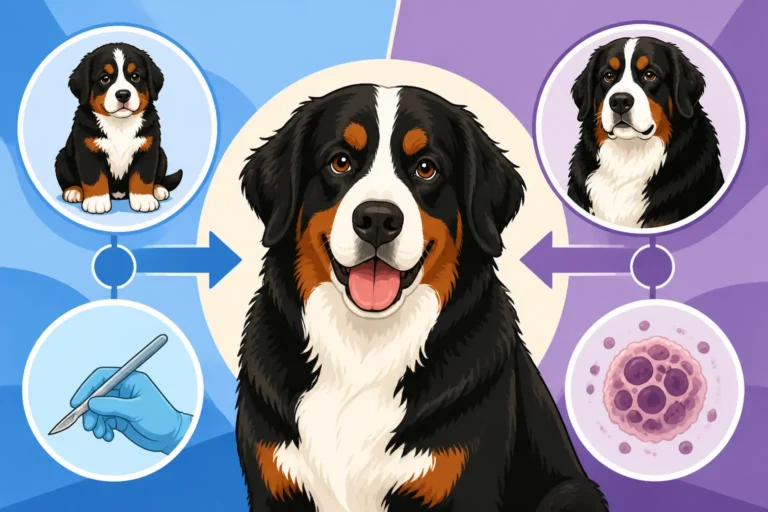
Why the Bernese Mountain Dog Dies Younger Than Other Giants
It’s a heartbreaking reality that many Bernese Mountain Dog owners face: these magnificent, gentle giants often leave us far too soon. While we dream of years filled with their loving presence, the lifespan of a Berner is notoriously shorter than many other large breeds. This guide will delve deeply into the various factors that contribute to why our beloved Bernese Mountain Dogs typically die younger, exploring the health challenges, genetic predispositions, and what owners can realistically do to support their cherished companions.
The Heartbreaking Reality of Bernese Lifespan
Bringing a Bernese Mountain Dog into your home is an unparalleled joy, a flurry of furry, affectionate energy that grows into a steadfast, loyal companion. However, that joy often comes with a looming sadness: the knowledge that their time with us is likely to be shorter than we'd wish. Many owners, especially those new to the breed, are often caught off guard by just how quickly those precious years fly by. It's a truth that weighs heavily on the hearts of Berner lovers worldwide, a silent agreement among us that we wish we had more time.
Average Lifespan Compared to Other Giants
When you look at other giant breeds, like Mastiffs, Great Danes, or even Newfoundlands, you might notice that a good portion of them can often reach 8, 9, or even 10+ years. For a Bernese Mountain Dog, the picture is quite different. The average lifespan for a Bernese Mountain Dog hovers around 7 to 8 years. This isn't just a number on a breed website; it's a stark reality for countless families who adore these dogs. Imagine having a dog for just seven years – it's barely enough time to truly know them, to watch them mature from a clumsy, playful puppy into a wise, settled adult.
This shorter average isn't due to a lack of love or care from their families; it’s intrinsically linked to specific health challenges prevalent within the breed. While some individual Berners do defy the odds and live into their double digits, they are unfortunately the exception rather than the rule. It’s a statistic that constantly reminds us to cherish every single moment.
What Age Is "Old" for a Bernese Mountain Dog?
For many dog breeds, "old age" truly begins around 8 or 9 years. For our Berners, however, the signs of aging can often begin much earlier. It’s not uncommon to see a Bernese Mountain Dog start to slow down, develop some stiffness in their gait, or show a general decrease in energy levels when they are only 5 or 6 years old. At this age, a Golden Retriever or a Labrador might still be considered in their prime, full of boundless energy.
This early onset of aging means that the window for active, robust companionship feels incredibly condensed. By the time a Berner reaches six, many owners are already making significant adjustments to their dog's routine, managing emerging health issues, and recognizing that their time together is drawing to a close. This compressed timeline adds an extra layer of poignancy to every grey hair that appears, every slow rise from their bed, and every moment spent cuddling on the couch. It forces us to appreciate their youth and vitality even more, knowing how fleeting it can be.
The Shadow of Cancer in Bernese Mountain Dogs
If there’s one health issue that casts the longest, darkest shadow over the Bernese Mountain Dog's lifespan, it is cancer. It’s not just a common cause of death; it's an alarmingly prevalent one, touching a devastating number of Bernese families. The sheer frequency and aggressive nature of cancers in this breed are arguably the primary reasons why their lives are cut so short compared to other large dogs.
Predominance of Certain Cancers
The grim statistics speak for themselves: over half of all Bernese Mountain Dogs will succumb to cancer. This is a staggering figure, far higher than in the general canine population. It’s not just "any" cancer, either; there are specific types that disproportionately affect Berners, almost as if they were genetically predisposed to these particular diseases.
The most notorious among these is Histiocytic Sarcoma in a Bernese Mountain Dog. This aggressive cancer originates from histiocytes, a type of immune cell, and can appear almost anywhere in the body – the spleen, lungs, lymph nodes, skin, bone, or even multiple organs simultaneously. It's a stealthy killer, often presenting with vague symptoms that are easily mistaken for other ailments, making early detection a significant challenge. By the time it's clearly identifiable, it has often already spread.
Beyond Histiocytic Sarcoma, Berners also have elevated rates of other aggressive cancers, including Lymphoma and Mast Cell Tumors. Lymphoma affects the lymphocytes, a type of white blood cell, and can manifest in the lymph nodes, spleen, liver, or bone marrow. Mast cell tumors, while sometimes appearing as skin lumps, can also be highly aggressive, metastasizing rapidly and affecting internal organs. The heartbreaking truth is that many Bernese owners will, at some point, receive a cancer diagnosis for their cherished dog, and it often feels like a ticking clock has begun.
Aggressiveness and Early Onset
What makes cancer in Bernese Mountain Dogs particularly devastating isn't just its prevalence, but also its aggressive nature and tendency to appear at relatively young ages. It's not uncommon for a Berner to be diagnosed with an aggressive cancer when they are only 4 or 5 years old – an age when many other breeds are still considered youthful and vibrant. This premature onset means that families often haven't had the full measure of time they hoped for with their dog before confronting a life-limiting illness.
The Age Histiocytic Sarcoma Reaches a Bernese Mountain Dog can be as young as 3 or 4, making it a crushing blow. These cancers often move at an alarming pace. One day, your Berner might seem a little off, maybe a bit lethargic or showing a slight limp, and within weeks, or even days, a devastating diagnosis of advanced cancer can be delivered. The speed with which these diseases progress leaves little time for intervention or even for owners to come to terms with the news. Treatments, while available, are often palliative rather than curative and can be incredibly costly, adding immense emotional and financial strain during an already difficult time. The sad reality is that for many Bernese, once a cancer diagnosis is made, the prognosis is often measured in months, not years.
Orthopedic Challenges and Their Impact on Longevity
Beyond the pervasive threat of cancer, Bernese Mountain Dogs, like many large and giant breeds, are predisposed to a host of orthopedic issues. While these conditions might not always be immediately fatal, they can significantly impact a dog's quality of life and, in turn, contribute to a shortened lifespan by making mobility difficult and painful, often leading to secondary health problems or difficult decisions for owners.
Hip and Elbow Dysplasia
The heavy, sturdy build that makes Berners so majestic also puts immense strain on their joints. Hip and elbow dysplasia are unfortunately very common in the breed. Hip dysplasia occurs when the hip joint doesn't form correctly, leading to a loose joint that rubs and grinds instead of sliding smoothly. This causes pain, lameness, and ultimately, debilitating arthritis. Similarly, elbow dysplasia involves abnormal development of the elbow joint, leading to pain and lameness.
Imagine carrying around Every Pound a Bernese Mountain Dog's Hips Carry – often well over 80 to 100 pounds – on joints that aren't perfectly formed. The constant stress and resulting pain from conditions like Hips That Fail Under a Bernese Mountain Dog's Weight or problems with their elbows can severely limit a dog's ability to walk, play, and even get up comfortably. While these conditions are manageable with medication, physical therapy, and sometimes surgery, the chronic pain and reduced mobility can lead to a more sedentary lifestyle, contributing to weight gain, muscle atrophy, and a general decline in overall health and happiness. Owners often face the difficult choice of managing chronic pain or considering euthanasia to prevent prolonged suffering, which tragically cuts short many lives that might otherwise have been longer.
Degenerative Myelopathy
Another cruel twist for some Bernese Mountain Dogs is Degenerative Myelopathy (DM), a progressive neurological disease that affects the spinal cord. It's often compared to Lou Gehrig's disease (ALS) in humans, as it slowly but relentlessly leads to weakness in the hind limbs, eventually progressing to paralysis. The SOD1 gene mutation is known to be a factor in DM, and Berners are one of the breeds for which a genetic test is available.
The journey with a Berner diagnosed with DM is heartbreaking. It typically starts with subtle weakness and incoordination in the back legs, often appearing around 7 to 9 years of age, though it can manifest earlier. Over time, the weakness progresses, making it difficult for the dog to stand, walk, and control their bladder and bowels. The Bernese Mountain Dog Whose Back Legs Give Out often eventually requires a wheelchair or full-time assistance from their owners. While DM itself is not painful, the loss of mobility and independence is devastating for these active, loving dogs. Owners face immense challenges in providing care, often lifting their large dogs, managing incontinence, and seeing their once-vigorous companions lose their ability to move freely. This profound impact on quality of life often forces families to make the incredibly difficult decision to euthanize before other life-limiting illnesses might even have a chance to set in.
Other Significant Health Concerns
While cancer and orthopedic issues are undeniably major contributors to the Bernese Mountain Dog's shorter lifespan, they aren't the only health challenges these magnificent dogs face. Other serious conditions, some acute and immediately life-threatening, and others more chronic, also play a role in their overall health and longevity.
Bloat (Gastric Dilatation-Volvulus)
Bloat, or Gastric Dilatation-Volvulus (GDV), is a terrifyingly rapid and often fatal condition that disproportionately affects large, deep-chested breeds like the Bernese Mountain Dog. In GDV, the stomach fills with gas and can twist upon itself, trapping food and gas, and cutting off blood supply to the stomach and other organs. It's a veterinary emergency that can kill a dog within hours if not treated immediately.
The onset of bloat is sudden and devastating. A happy, healthy Berner can suddenly become restless, drool excessively, try to vomit without producing anything, and exhibit a visibly distended abdomen. Owners need to be acutely aware of What Bloat Looks Like in a Bernese Mountain Dog because every minute counts. The risk factors include eating quickly, exercising too close to meals, and stress. While preventive measures like feeding smaller, more frequent meals, using slow feeder bowls, and restricting exercise around mealtimes can help, the best defense is often a prophylactic gastropexy, a surgical procedure that tacks the stomach to the abdominal wall to prevent it from twisting. Even with immediate emergency surgery, the survival rate isn't 100%, and the financial and emotional toll on owners is immense. This acute, life-threatening condition adds another layer of risk to owning a Bernese Mountain Dog, often leading to tragic, sudden losses.
Heart and Kidney Issues
Beyond the more commonly cited health issues, Bernese Mountain Dogs can also be susceptible to certain heart and kidney conditions that can quietly shorten their lives. While not as prevalent as cancer, these conditions can still be significant.
One such heart condition is Subvalvular Aortic Stenosis (SAS), a congenital heart defect where a narrowing below the aortic valve impedes blood flow from the heart. While mild cases might go unnoticed, more severe cases can lead to heart murmurs, exercise intolerance, fainting, and even sudden death. Regular Heart Screening for a Bernese Mountain Dog through veterinary check-ups and potentially a cardiac ultrasound can help identify this early.
Kidney disease, both acute and chronic, can also affect Berners. While chronic kidney disease is often a progressive condition associated with aging, some Bernese can unfortunately develop Kidney Disease in a Bernese Mountain Dog at a younger age. Symptoms might be subtle at first, including increased thirst and urination, lethargy, and decreased appetite. Regular bloodwork, especially as a Berner ages, is crucial for early detection and management, as timely intervention can sometimes slow the progression of the disease and improve quality of life, but ultimately, kidney failure is a terminal condition. These less common but equally serious conditions further illustrate the complex health landscape that contributes to the breed's reduced longevity.
The Role of Genetics and Responsible Breeding
Understanding why Bernese Mountain Dogs die younger isn't complete without looking at the breed's history and the critical role of genetics. While no breeder can guarantee a cancer-free or health-perfect dog, responsible breeding practices are absolutely essential in trying to improve the breed's future health outcomes.
The Gene Pool and Founder Effect
The Bernese Mountain Dog breed, like many purebred dogs, has a relatively small gene pool, largely due to historical events. The breed faced near extinction in the late 19th and early 20th centuries. Only a small number of dogs survived, and it was these "founder" dogs that were used to rebuild the population. This phenomenon, known as the "founder effect," means that certain genes, good and bad, were disproportionately amplified in the surviving population.
If some of those original founder dogs carried genes predisposing them to certain health issues, particularly cancers or orthopedic problems, those genes became widespread throughout the breed as it recovered and grew in popularity. This means that even Berners from seemingly diverse lines might share distant common ancestors carrying these deleterious genes. This genetic bottleneck is a major reason why Whether Cancer Is Bred Into the Bernese Mountain Dog is a question frequently asked, and sadly, the answer often points to an inherited predisposition. It's a complex legacy that breeders are constantly working against, trying to introduce genetic diversity while maintaining the breed's distinct characteristics.
Importance of Health Testing and Databases
Given these inherent genetic challenges, responsible breeders play an absolutely vital role in trying to mitigate the risks. This involves rigorous health testing of breeding stock to identify and, where possible, reduce the transmission of genetic diseases. Key tests include:
- Orthopedic Clearances: OFA (Orthopedic Foundation for Animals) and PennHIP evaluations for hips and elbows are crucial to ensure breeding dogs have healthy joints, reducing the likelihood of passing on dysplasia.
- Genetic Testing: Tests for conditions like Degenerative Myelopathy (SOD1 gene) can help breeders make informed decisions to avoid producing affected puppies.
- Eye Exams: Regular examinations by a veterinary ophthalmologist to screen for hereditary eye conditions.
- Cardiac Screening: Checking for heart conditions like SAS.
Beyond individual health testing, databases like Berner-Garde are invaluable resources. Berner-Garde is a comprehensive, open-source database where Bernese Mountain Dog owners and breeders can submit health information, pedigree data, and even causes of death. This allows prospective puppy buyers to research the longevity and health history of a puppy's ancestors, not just the immediate parents. While navigating Berner-Garde Records and What They Cost to Check might seem daunting, it's a powerful tool. By using these tools and making informed breeding choices, responsible breeders strive to increase the odds of producing healthier, longer-lived Berners, though it's an uphill battle against deeply embedded genetic predispositions.
What Owners Can Do: Management and Proactive Care
While the statistics about Bernese Mountain Dog lifespans can be daunting, it's important to remember that as owners, we have a significant role to play in maximizing our dogs' health and happiness. Proactive care, a vigilant eye, and a strong partnership with your veterinarian can truly make a difference in your Berner's quality of life, and potentially, its longevity.
Proactive Veterinary Care and Early Detection
One of the most impactful things you can do for your Bernese Mountain Dog is to maintain a proactive and consistent relationship with your veterinarian. Don't wait until your dog is obviously sick to schedule an appointment. Regular wellness check-ups, even when your Berner seems perfectly healthy, are paramount, especially as they mature.
For younger Berners, these check-ups ensure they are growing properly and receiving appropriate vaccinations and parasite control. As they approach middle age (around 4-5 years old), and definitely when Screening an Older Bernese Mountain Dog begins around age six, yearly (or even semi-annual) comprehensive exams become even more critical. These often include bloodwork, urinalysis, and a thorough physical examination. Berners are stoic and can hide discomfort, so your vet might catch subtle changes that you might miss at home.
Beyond routine exams, being hyper-vigilant for any changes in your dog's behavior, appetite, energy level, or appearance is essential. Small, seemingly insignificant changes could be the first whisper of a serious underlying condition, particularly cancer. A new lump, a persistent cough, a slight limp that doesn't resolve, or even a subtle shift in their usual demeanor warrant a vet visit. Early detection, while not a guarantee, offers the best chance for successful treatment or management of many conditions.
Nutrition, Exercise, and Weight Management
A cornerstone of good health for any dog, but especially for a large breed like the Bernese Mountain Dog, is appropriate nutrition, regular exercise, and meticulous weight management. Their large size and predisposition to joint issues mean that carrying extra weight is particularly detrimental.
Feeding a high-quality, large-breed specific diet, formulated for their age and activity level, is crucial. For puppies, ensuring slow, steady growth is vital to prevent skeletal problems. As adults, portion control is key. It can be hard to say no to those pleading Berner eyes, but maintaining a The Body Condition a Bernese Mountain Dog Should Carry is one of the kindest things you can do for them. You should be able to feel their ribs easily without seeing them, and they should have a discernible waist when viewed from above. Regularly checking Finding a Bernese Mountain Dog's Ribs Under the Coat can give you an early warning if they're gaining too much. Studies suggest that Whether a Lean Bernese Mountain Dog Lives Longer is often true, as less weight means less stress on their joints and internal organs.
Consistent, moderate exercise is also vital. While Berners aren't usually marathon runners, they thrive on daily walks, supervised play, and mental stimulation. Avoid intense, high-impact activities, especially during their growth phases. Swimming can be an excellent, low-impact exercise option that supports muscle development without stressing joints. A balanced approach to diet and exercise helps keep their bodies in the best possible condition, supporting joint health and overall vitality.
Pet Insurance Considerations
Given the breed's propensity for expensive health issues, from cancer treatments to orthopedic surgeries and emergency bloat care, investing in pet insurance is a serious consideration for many Bernese Mountain Dog owners. The costs associated with diagnosing and treating these complex conditions can quickly escalate into thousands, or even tens of thousands, of dollars.
Choosing a comprehensive policy, ideally one that covers hereditary and congenital conditions as well as accidents and illnesses, is crucial for a Berner. Many owners find peace of mind knowing that financial concerns won't dictate their ability to provide the best possible care for their dog. When researching policies, pay close attention to annual limits, deductibles, and reimbursement percentages. Companies like Healthy Paws are well-regarded for their comprehensive coverage, particularly for chronic and serious conditions like cancer, which is a major concern for Bernese owners. They offer unlimited annual payouts, which can be a huge relief when facing Oncology Bills a Bernese Mountain Dog Owner Faces.
It's highly advisable to Insuring a Bernese Mountain Dog Before Its First Lump or before any symptoms of a pre-existing condition appear, as most policies will not cover conditions diagnosed before or during the waiting period. While it's an ongoing monthly expense, pet insurance can be an invaluable safety net, allowing you to make medical decisions based on what's best for your beloved Berner, rather than what your bank account can afford. Having that support can truly ease the burden during incredibly stressful times.
Disclaimer
The information provided in this article is for general informational purposes only and is not intended as a substitute for professional veterinary advice. Always consult with a qualified veterinarian for any health concerns or before making any decisions about your pet's care.