What a Bernese Mountain Dog Weighs at Six Months
Bringing home a Bernese Mountain Dog puppy is a joyous experience, but it also comes with a unique set of worries, particularly when you start noticing just how quickly they grow! Many new Berner parents find themselves constantly wondering if their fluffy companion is on the right track, especially when they hit that gangly six-month mark. This guide is here to demystify what a Bernese Mountain Dog typically weighs at six months old, helping you understand healthy growth and what to look out for.
The Rapid Growth Phase of a Bernese Mountain Dog Puppy
If you've ever owned a smaller breed, the growth rate of a Bernese Mountain Dog puppy can be truly astounding. They go from tiny, cuddly fluff balls to sizable youngsters in what feels like the blink of an eye. This rapid development is a defining characteristic of giant breeds, and it's also where many of their unique care considerations come into play. It's a critical period where their skeletal system is developing at an incredible pace, laying the foundation for their adult size and health.
Understanding Typical Growth Patterns
Bernese Mountain Dogs don't just grow outward; they grow upward and then they fill out. In their first six months, you'll see a dramatic increase in height and length, often accompanied by a lanky, sometimes awkward, phase. Think of it like a human teenager who suddenly shoots up! This isn't just about weight on the scale; it's about bone development, muscle growth, and organ maturation. Unlike smaller breeds that might reach close to their adult weight by six months, a Bernese Mountain Dog is still very much in its "puppy" phase physically, even if they're starting to look like a small adult. Their bodies are working overtime to build a strong frame capable of supporting their eventual hundred-plus pound stature. How Fast a Bernese Mountain Dog Puppy Should Grow is a common question, and the answer is "very fast," but it needs to be controlled fast.
One of the biggest concerns during this time is ensuring their joints develop properly. Because they're gaining so much weight and bone length so quickly, any imbalance in nutrition or excessive strain on their developing joints can have long-lasting consequences. It’s why you often hear breeders and vets stress the importance of specific large breed puppy food and controlled exercise. You're not just feeding a puppy; you're nurturing the intricate framework that will carry a magnificent, heavy dog for years to come.
Factors Influencing a Six-Month-Old's Weight
Several factors can influence exactly where your Bernese Mountain Dog lands on the weight spectrum at six months. It’s not a one-size-fits-all number, and understanding these influences can help ease any anxieties you might have.
First, genetics play a huge role. Look at the parents and grandparents if possible. If your puppy comes from a line of smaller Bernese, they might naturally be on the lighter side, even at six months. Conversely, if their lineage boasts larger, robust Berners, your puppy will likely follow suit. This is why good breeders often provide information on the size and weight of their breeding dogs.
Second, sex makes a difference. Typically, male Bernese Mountain Dogs are larger and heavier than females, and this difference often starts to become apparent by six months. While both sexes are growing rapidly, males tend to carry more muscle and bone mass.
Third, nutrition is paramount. What you feed your puppy, how much, and how often directly impacts their growth. Overfeeding, particularly with diets not formulated for large breed puppies, can lead to dangerously fast growth and put undue stress on developing joints. We'll delve into this more, but choosing the right food is key. Brands like Chewy offer a wide selection of large breed puppy formulas that are specifically designed with controlled calcium and phosphorus levels.
Finally, activity level also plays a part. A puppy that's naturally more active and rambunctious might burn more calories and have a slightly leaner build than a less active sibling, even if both are otherwise healthy. However, it's crucial that exercise is appropriate for their age and size, as excessive or high-impact activity can be detrimental during this rapid growth phase.
Expected Weight Ranges at Six Months Old
Alright, let's get down to the numbers. While every Bernese Mountain Dog is an individual, there are general ranges you can expect your puppy to fall into at six months. Remember, these are guidelines, not strict rules. Your vet is always the best resource for evaluating your specific puppy's growth.
At six months, a Bernese Mountain Dog puppy is usually still a bit leggy and might not have fully developed its broad, sturdy adult chest. They are typically past the most intense period of their growth spurt in terms of height, but they are still actively growing and beginning to put on more muscle and substance.
Male vs. Female Weight Differences
As mentioned, there's a noticeable difference between males and females even at this young age.
- Male Bernese Mountain Dog at Six Months: You can generally expect a male Bernese Mountain Dog to weigh anywhere from 60 to 85 pounds at six months old. They are often taller and have a more substantial bone structure already developing.
- Female Bernese Mountain Dog at Six Months: Female Bernese Mountain Dogs at six months typically weigh between 50 to 75 pounds. They will be slightly smaller and often appear a bit more refined in their build compared to their male counterparts.
These ranges can vary based on individual genetics and how quickly they've grown in previous months. Some may be on the lower end, some on the higher, and still be perfectly healthy. The most important thing is a consistent, steady growth curve, rather than hitting an exact number. What a Bernese Mountain Dog Weighs at Each Month goes into more detail about the overall growth timeline.
Interpreting Growth Charts and Breeder Information
Many breeders provide growth charts or insights into the typical weights of their puppies at various stages. This information can be incredibly valuable because it's specific to your puppy's genetic lineage. If your breeder tells you their lines tend to be on the smaller side, your 6-month-old might naturally fall at the lower end of the general range.
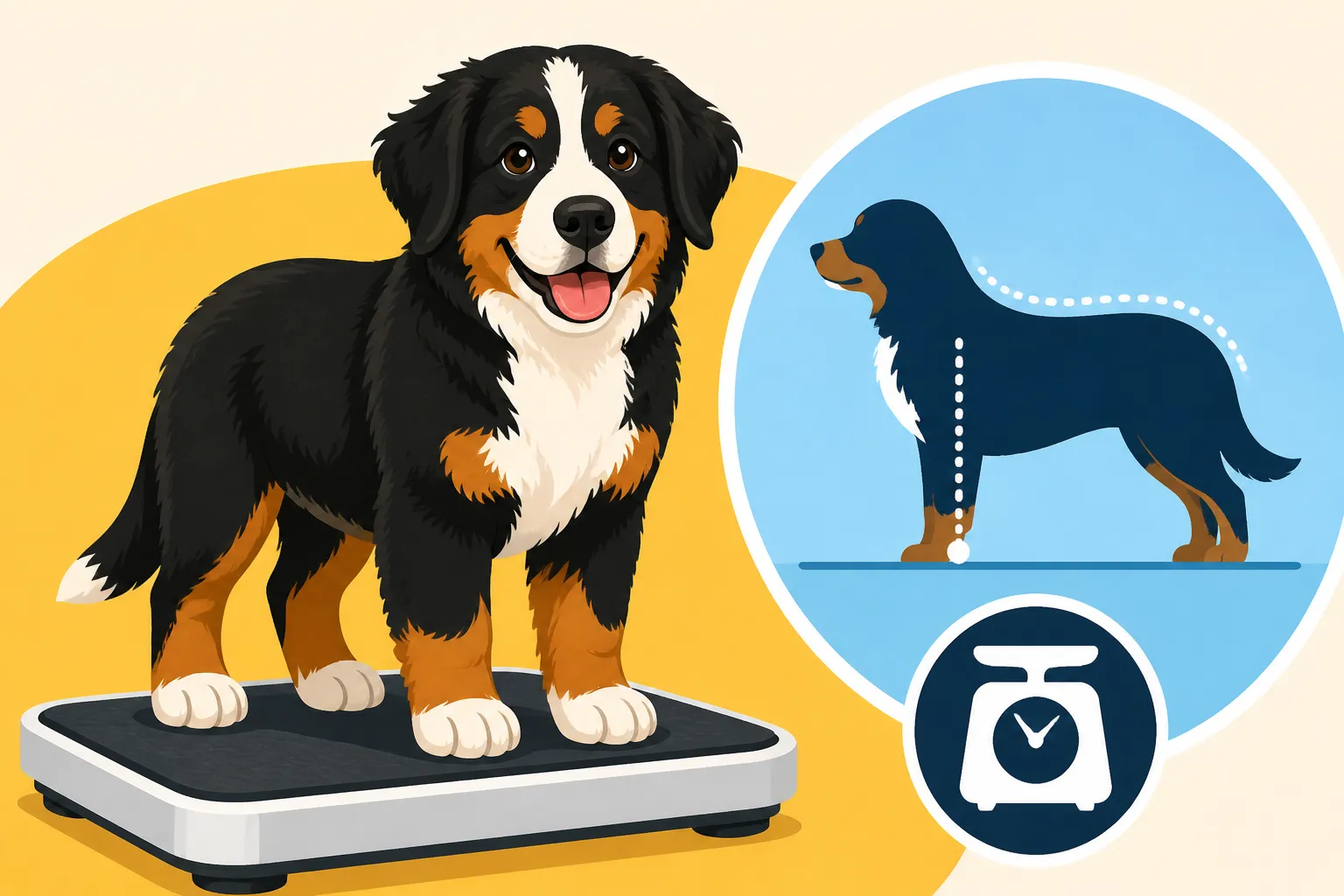
When looking at growth charts, whether from your breeder or a general resource, pay attention to the trend. Is your puppy gaining weight steadily? Are they maintaining a healthy body condition (you should be able to feel their ribs without seeing them prominently, and they should have a discernible waist when viewed from above)? Sudden drops or spikes in weight can be more concerning than simply being a few pounds outside an arbitrary range.
Here’s a simplified look at expected growth, keeping in mind individual variation:
| Age | Male Bernese Mountain Dog (Approx. Weight) | Female Bernese Mountain Dog (Approx. Weight) |
|---|---|---|
| 2 Months | 20-30 lbs | 18-28 lbs |
| 3 Months | 30-45 lbs | 28-40 lbs |
| 4 Months | 40-60 lbs | 35-55 lbs |
| 5 Months | 50-75 lbs | 45-65 lbs |
| 6 Months | 60-85 lbs | 50-75 lbs |
| 12 Months | 80-105 lbs | 70-95 lbs |
| Adult | 80-115+ lbs | 70-95+ lbs |
Remember that these numbers are averages. Your pup's vet will also assess their overall body condition score, which is often a more reliable indicator of health than weight alone. A puppy that's a bit heavier but lean and muscular is different from a puppy that's the same weight but carrying too much fat.
The Dangers of Too Fast or Too Slow Growth
While it’s natural to want your Bernese Mountain Dog to grow into a magnificent specimen, it’s crucial to understand that faster isn’t always better. In fact, for giant breeds, rapid growth can be detrimental. Equally, growth that is significantly too slow could signal underlying health issues.
The Risks of Overfeeding and Rapid Weight Gain
This is perhaps one of the most significant concerns for Bernese Mountain Dog puppy owners. Overfeeding a growing Berner, or feeding an inappropriate diet, can lead to accelerated growth, which puts immense stress on their rapidly developing bones and joints. What Fast Growth Costs a Bernese Mountain Dog's Joints is a topic that can't be stressed enough. Issues like hip and elbow dysplasia, osteochondritis dissecans (OCD), and other orthopedic problems are unfortunately common in large breeds, and rapid, uncontrolled growth is a major contributing factor.
When a puppy grows too quickly, their bones and cartilage may not have enough time to properly mature and strengthen. The cartilage might become too thick and retain an immature structure, making it more prone to damage. Excess weight also means more pressure on these vulnerable joints. It’s a vicious cycle where faster growth leads to more weight, which leads to more joint stress, increasing the likelihood of painful and debilitating conditions that can dramatically affect their quality of life.
It's tempting to think a chunkier puppy is a healthier puppy, but for a Bernese Mountain Dog, a lean body condition is much preferred during growth. This doesn't mean restricting calories to the point of malnourishment, but rather feeding an age-appropriate, large breed puppy food according to guidelines, and keeping a close eye on their body condition. Brands like Ollie (though more focused on fresh food, they can still guide calorie intake) or high-quality kibble options found on Amazon should provide specific large-breed puppy formulas.
When to Be Concerned About Underweight or Stunted Growth
While rapid growth is a bigger concern, significant underweight or stunted growth also warrants attention. If your six-month-old Bernese Mountain Dog is significantly below the typical weight range, appears excessively thin with ribs, hips, and spine easily visible, or seems lethargic and underdeveloped, it's time to consult your veterinarian.
Reasons for being underweight can include:
- Inadequate Nutrition: Not getting enough calories, or a diet lacking essential nutrients.
- Parasites: Intestinal worms can rob a puppy of nutrients, leading to poor growth.
- Malabsorption Issues: Some puppies have difficulty absorbing nutrients from their food.
- Underlying Health Conditions: Less commonly, medical issues could be impacting growth.
- Extreme Activity: A very active puppy might need more calories than a typical guideline suggests.
Your vet will conduct a thorough examination, check for parasites, and might recommend blood tests to rule out any underlying conditions. They can also help you adjust your puppy's diet to ensure they're getting adequate, balanced nutrition for healthy development. It’s important not to try to “catch up” growth too quickly with excessive feeding, as this can create the same orthopedic issues as overfeeding a normal-weight puppy. The goal is steady, healthy progress.
How to Support Healthy Growth for Your Bernese Mountain Dog Puppy
Supporting your Bernese Mountain Dog's healthy growth at six months and beyond involves a holistic approach, focusing on nutrition, appropriate exercise, and consistent veterinary care. This is an investment in their long-term health and well-being. Feeding a Bernese Mountain Dog Puppy to a Hundred Pounds is a journey that requires careful planning and execution.
Nutrition Choices for Large Breed Puppies
Choosing the right food is foundational. Look for high-quality commercial dog foods specifically labeled for "large breed puppies" or "all life stages" that are appropriate for large breeds. These formulas are designed with a controlled calcium-to-phosphorus ratio and a slightly lower calorie density than regular puppy foods. This controlled nutrient profile helps to slow down the rate of growth just enough to allow bones and joints to mature properly, reducing the risk of orthopedic problems later in life. Why a Bernese Mountain Dog Puppy Needs Controlled Calcium is a crucial piece of this puzzle.
Avoid feeding adult dog food too early, as these diets often lack the necessary protein and fat levels for a growing puppy. Conversely, steer clear of "performance" or "high-energy" puppy foods unless specifically recommended by your vet for an unusually active puppy, as these can contribute to too-rapid growth. Read labels carefully. If you're shopping on Chewy or Amazon, you'll find plenty of options, but always check the nutrient analysis and ensure it's suitable for large breeds. Always measure your puppy’s food, rather than free-feeding, and stick to the manufacturer’s guidelines for their current weight and age, adjusting as needed based on their body condition.
Managing Exercise and Activity Levels
At six months, your Bernese Mountain Dog puppy will have boundless energy, but it's essential to manage their exercise carefully. Their growth plates are still open, making them vulnerable to injury from high-impact activities or overexertion.
- Controlled Walks: Short, controlled walks on a leash are excellent. Avoid long hikes, jogging, or strenuous activities. The "five-minute rule" is a good guideline: approximately five minutes of structured exercise per month of age, twice a day. So, a six-month-old puppy would get around 30 minutes of walking, twice a day. This is detailed further in The Five Minute Rule and a Bernese Mountain Dog Puppy.
- Gentle Play: Supervised playtime in a soft, safe area is great. Avoid activities that involve a lot of jumping, twisting, or hard landings, such as fetch with sudden stops or jumping off high surfaces. Hard Surfaces and a Growing Bernese Mountain Dog can also put stress on developing joints.
- Avoid Stairs and Jumping: While they might be physically capable, frequent stair climbing or jumping on and off furniture should be minimized. Use ramps or lift them into cars if necessary.
- Rest is Crucial: Puppies need a lot of sleep for proper development. Ensure your six-month-old Bernese has plenty of quiet time for naps throughout the day.
Remember, you're building a strong foundation, not training an agility champion right now. Patient, consistent, and gentle exercise is key. Whether a Heavy Bernese Mountain Dog Puppy Damages Itself is a real concern, and proper exercise management is a significant part of prevention.
Regular Vet Check-ups and Monitoring
Consistent veterinary care is your best friend throughout your Bernese Mountain Dog's growth. At six months, your puppy will likely still be visiting the vet for booster shots or a routine check-up, such as those covered in The Puppy Shot Series for a Bernese Mountain Dog. These appointments are invaluable opportunities to discuss your puppy's weight, diet, and overall development.
Your vet will:
- Assess Body Condition Score: They'll evaluate your puppy's physical condition beyond just the number on the scale, feeling for ribs and assessing muscle mass.
- Monitor Growth Curve: They can compare your puppy's growth to breed-specific charts and track their progress over time.
- Provide Nutritional Guidance: If your puppy is growing too fast or too slow, or if you have questions about specific food brands, your vet can offer tailored advice.
- Discuss Joint Health: They can perform preliminary checks for any signs of orthopedic issues and advise on preventive measures.
- Address Any Concerns: Don't hesitate to bring up any worries you have, whether it's about their appetite, energy levels, or any limping or awkward gait. Early detection of any issues is always best.
The first year with a Bernese Mountain Dog can come with a good number of bills, as highlighted in The Monthly Bill in a Bernese Mountain Dog's First Year, but these regular vet visits are a non-negotiable investment in their long-term health. Think of it as part of the overall commitment to What a Bernese Mountain Dog Costs Over Its Whole Life.
By paying close attention to these aspects of care, you’ll be doing everything you can to ensure your beautiful Bernese Mountain Dog grows into a healthy, robust, and happy adult, ready to lean on you (literally!) for years to come.
Disclaimer
This article is for general informational purposes only and does not constitute professional advice. Laws, prices and regulations vary by location and change over time. Consult a qualified professional for guidance on your specific situation.