Whether Bowl Height Matters for a Bernese Mountain Dog
When you welcome a Bernese Mountain Dog into your home, you're signing up for a lot of love, a whole lot of hair, and unfortunately, a fair share of worries about their health. One of the biggest fears for any Berner parent is bloat, or Gastric Dilatation-Volvulus (GDV), a life-threatening condition that can strike without much warning. For years, many of us have been told that elevated food bowls could help prevent this scary ailment, especially in deep-chested breeds like our Berners. But what if that common advice was actually leading us down the wrong path? This guide will dive deep into the science and practical considerations around feeding bowl height for your Bernese Mountain Dog, helping you make informed choices for their well-being.
Understanding the Bernese Mountain Dog's Unique Digestive System and Bloat Risk
Bringing a Berner into your life means understanding their particular sensitivities, and their digestive system is definitely high on that list. These magnificent dogs are not just prone to certain joint issues or cancers; they also carry a higher risk for a condition that can turn fatal in mere hours: bloat.
What is Bloat and Why is it a Concern for Berners?
Bloat, scientifically known as Gastric Dilatation-Volvulus (GDV), is every large dog owner's nightmare. It happens when a dog's stomach fills with gas, food, or fluid (dilatation) and then twists (volvulus). This twisting cuts off the blood supply to the stomach and other organs, and it's an incredibly painful and rapidly progressing condition. The pressure on the diaphragm makes it hard for your dog to breathe, and without immediate emergency veterinary intervention, it almost always leads to death.
Bernese Mountain Dogs are particularly susceptible to GDV, largely due to their deep and narrow chest conformation. Breeds with this body type, such as Great Danes, Standard Poodles, and indeed, our beloved Berners, have a higher statistical likelihood of experiencing bloat. It's a terrifying prospect, watching your happy, goofy dog suddenly become distressed, restless, and unable to get comfortable. The urgency of this condition cannot be overstated. Recognizing the signs of bloat, which often include a distended abdomen, unproductive retching, pacing, and drooling, is paramount for survival. If you ever suspect your Bernese Mountain Dog is experiencing this, it's a race against time, as you can read more about in our detailed post on How Fast Bloat Kills a Bernese Mountain Dog. Knowing what to look for and acting swiftly can make all the difference. For a comprehensive overview of symptoms, check out What Bloat Looks Like in a Bernese Mountain Dog.
Common Misconceptions About Preventing Bloat
For decades, many well-meaning veterinarians and experienced dog owners advocated for elevated food bowls, especially for large and giant breeds. The theory was that raising the bowl would allow the dog to eat in a more natural, comfortable posture, thereby reducing the amount of air swallowed during meals and, consequently, decreasing the risk of bloat. This advice became so widespread that elevated feeding stations became a common sight in homes with large dogs. We all wanted to do the best for our companions, and this seemed like a logical, easy step to take.
However, sometimes conventional wisdom, no matter how intuitively appealing, doesn't hold up under scientific scrutiny. Many other ideas have also floated around, such as believing that eating too fast is the sole cause of bloat, leading owners to invest in slow-feeder bowls (which can be beneficial for other reasons). There's also the notion that drinking too much water after eating, or specific types of food, are the primary culprits. While some of these factors do play a role, the role of elevated bowls was perhaps the most deeply ingrained misconception, and one that required significant research to overturn. The thought that something you're doing to help could actually be harming your dog is a tough pill to swallow, and it highlights the importance of staying informed with the latest veterinary research. Many owners still struggle with the idea that Whether a Fast-Eating Bernese Mountain Dog Bloats More is only one piece of the complex puzzle.
The Science Behind Bowl Height and Bloat
It's natural to want to do everything we can to protect our Berners, and when it comes to bloat, the advice around feeding practices can feel contradictory and confusing. Let's cut through the noise and look at what the scientific research actually tells us about bowl height.
Research Findings on Elevated Bowls and GDV
Contrary to popular belief and decades of anecdotal advice, comprehensive scientific studies have indicated that elevated food bowls may actually increase the risk of GDV in large and giant breeds, rather than reduce it. The most influential research on this topic comes from a large-scale study conducted by Purdue University, which investigated risk factors for bloat in various breeds, including those known to be highly susceptible.
The findings were quite surprising to many in the dog community. The study concluded that feeding from an elevated bowl was associated with a higher risk of GDV in large and giant breed dogs. While the exact mechanisms are still being debated, researchers hypothesize that eating from a raised position might encourage dogs to eat faster, gulping down more air with their food. It could also lead to an awkward swallowing motion that introduces more air into the stomach. Imagine trying to eat from a height that isn't quite natural for your neck and body; it could disrupt the normal flow of digestion and air intake. This directly challenges the previous thought that a dog bending down low was somehow causing more ingested air. For many Berner owners who had diligently provided elevated bowls, this information was unsettling, highlighting how important it is to base our care decisions on robust scientific evidence rather than just tradition or assumption. It can be frustrating when the "right" thing to do changes, but it's all in the name of better health for our dogs.
Factors Proven to Influence Bloat Risk
While the elevated bowl theory has largely been debunked as a protective measure, and in fact, linked to increased risk, there are several other factors that have been consistently identified as genuinely influencing a dog's susceptibility to bloat. These are the areas where our focus should truly lie when considering prevention.
Here are the key factors supported by research:
- Genetics and Breed Predisposition: As we discussed, deep-chested breeds like Bernese Mountain Dogs are inherently at higher risk. If a dog's close relatives have bloated, their risk increases significantly. This is why it's so important for breeders to be transparent about health history.
- Eating Speed: Dogs who eat very quickly, gulping down their food, tend to ingest more air, which is a precursor to bloat. This is where slow-feeder bowls can be genuinely helpful, not because of height, but because they physically slow down consumption.
- Single, Large Meals: Feeding one large meal a day, especially if consumed quickly, puts more stress on the digestive system than smaller, more frequent meals.
- Exercise Before or After Eating: Vigorous exercise or excitement immediately before or after a meal is consistently linked to increased bloat risk. It's crucial to give your Berner a quiet period before and after eating. This advice is critical, and you can learn more about it in Whether Exercise After Eating Bloats a Bernese Mountain Dog.
- Anxiety and Stress: Some studies suggest that anxious or stressed dogs may be more prone to bloat. A calm feeding environment is always best.
- Age and Sex: Older dogs tend to be at a higher risk, and male dogs generally have a slightly higher incidence of bloat than females.
- Temperament: Dogs with a fearful or aggressive temperament may also have a slightly increased risk.
- Underlying Health Conditions: Certain medical conditions, while not direct causes, can sometimes play a role by affecting digestion or overall systemic health.
Understanding these true risk factors helps us shift our focus from potentially harmful practices like elevated bowls to strategies that are genuinely backed by science. It's about empowering ourselves with accurate information to best protect our cherished Berners. You might be surprised to learn about Which Bernese Mountain Dogs Are Most at Risk of Bloat beyond just their breed.
Here's a quick comparison of common bloat prevention beliefs versus current scientific understanding:
| Prevention Strategy | Common Belief (Often Outdated) | Current Scientific Understanding (Evidence-Based) |
|---|---|---|
| Elevated Food Bowls | Prevents bloat by promoting better posture. | Increases risk by encouraging faster eating/air gulping. |
| Eating Speed | Fast eating can contribute. | Fast eating does contribute to ingesting more air. |
| Single Large Meal | Convenient for owners. | Increases risk due to stomach overload. |
| Exercise Around Meals | No significant impact. | Increases risk immediately before or after eating. |
| Anxiety/Stress | Not directly related. | May increase risk; calm environment is better. |
| Genetics/Breed | Some breeds are more prone. | Major risk factor; deep chest is key. |
Practical Feeding Strategies for Your Bernese Mountain Dog
Knowing the science is one thing; putting it into practice for your big, lovable Berner is another. It's about creating a routine that maximizes their health and minimizes risks, all while maintaining their quality of life.
Optimal Bowl Placement and Type
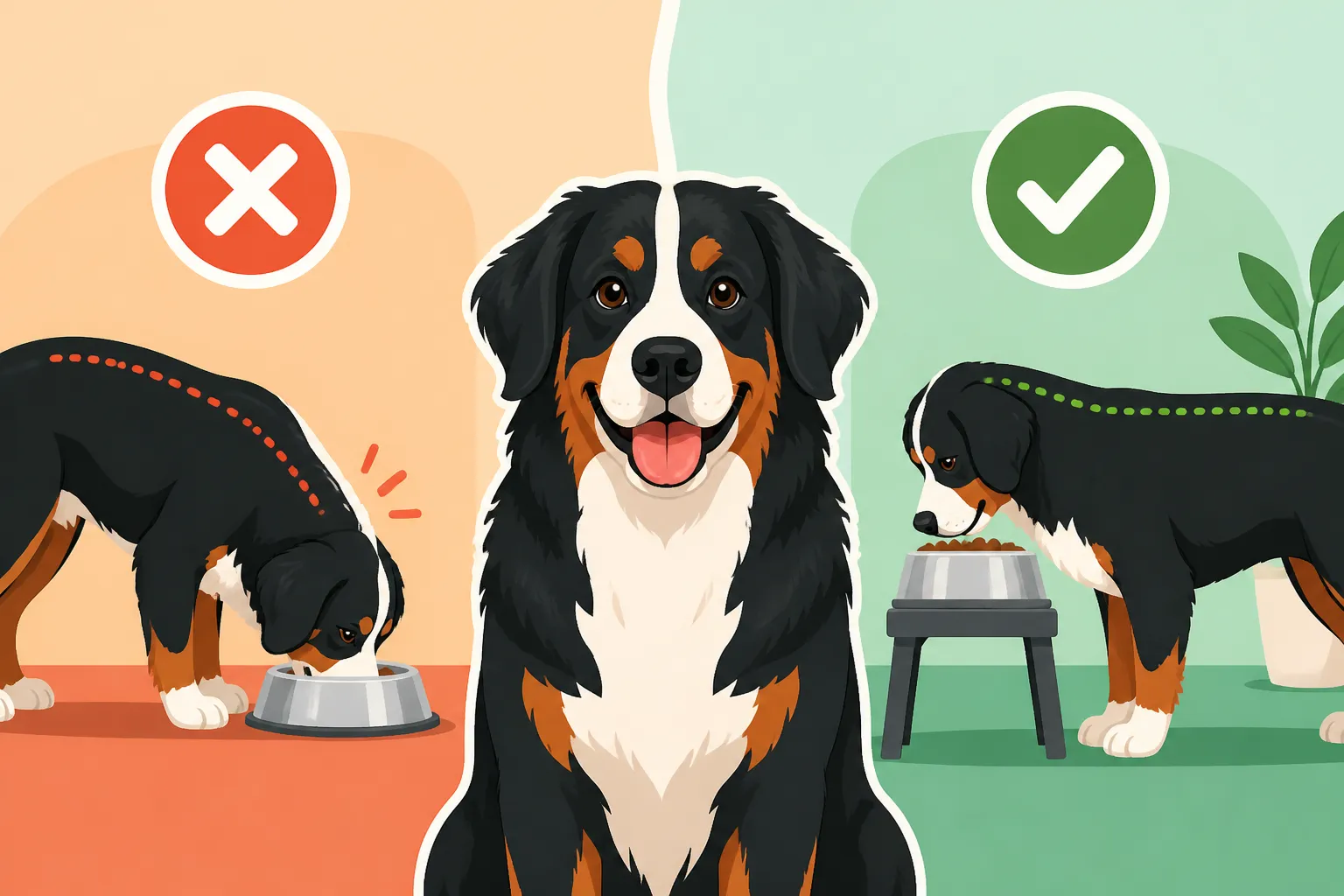
Given the research findings, the most practical and evidence-based recommendation for Bernese Mountain Dogs is to feed them at floor level. Ditch those elevated feeding stands that were once thought to be helpful. Letting your Berner eat with their bowl on the ground encourages a more natural eating posture and may reduce the amount of air they gulp down with their food.
When it comes to the type of bowl, stainless steel is generally the best choice. It's durable, easy to clean, and non-porous, meaning it won't harbor bacteria like plastic bowls can, or crack like ceramic. For Berners who tend to eat their meals in record time (and let's be honest, many do!), a slow-feeder bowl can be a fantastic addition. These bowls have various ridges or patterns inside that force your dog to eat around them, significantly extending mealtime and reducing air intake. This isn't about the height but the speed, which is a proven risk factor for bloat. Always ensure your Berner has constant access to fresh, clean water, again in a sturdy, easy-to-clean bowl at floor level. Hydration is vital for overall health, but avoid letting them gulp huge amounts right after a meal or heavy exercise.
Feeding Routines and Portion Control
Beyond the bowl itself, how and when you feed your Bernese Mountain Dog plays a critical role in managing bloat risk and promoting healthy growth. Instead of one large meal a day, which can put undue stress on their digestive system and increase bloat risk, aim for two to three smaller meals spread throughout the day. This distributes the food intake, reduces stomach distension, and allows for more consistent digestion. Our article on Why a Bernese Mountain Dog Never Gets One Big Meal explains this in more detail.
Portion control is equally crucial, especially for a breed like the Bernese Mountain Dog. Overfeeding, particularly during their rapid growth phase as puppies, can contribute to skeletal and joint problems later in life, and excessive weight in adulthood puts more strain on their already susceptible joints. Follow your veterinarian's guidance on appropriate food quantities based on your dog's age, weight, activity level, and specific food. While it's tempting to free-feed or give them extra, sticking to measured meals is key. Remember, a fit Berner is a healthier Berner. You can find more information on appropriate amounts in How Much an Adult Bernese Mountain Dog Eats.
Finally, establish a calm feeding routine. Feed your Berner in a quiet, undisturbed area where they can eat without rushing or anxiety. Crucially, enforce a "rest period" of at least an hour before and after meals, avoiding strenuous exercise, exciting play, or excessive water consumption during these times. This allows their stomach to settle and significantly reduces the risk of GDV.
Considering Prophylactic Gastropexy
Even with the most diligent feeding practices, the inherent risk of bloat in Bernese Mountain Dogs remains a significant concern. For many owners, the anxiety is constant. This is where a procedure called prophylactic gastropexy comes into play as a preventative measure.
A gastropexy is a surgical procedure where the stomach is permanently tacked or sutured to the abdominal wall. It doesn't prevent the stomach from dilating (filling with gas), but it does prevent it from twisting (volvulus), which is the fatal component of GDV. Essentially, it turns a potentially deadly bloat event into a much less severe gastric distension that your vet can usually manage without emergency surgery.
Many veterinarians recommend considering a prophylactic gastropexy for high-risk breeds like Bernese Mountain Dogs, often performed at the same time as spaying or neutering. Combining it with another scheduled surgery means your dog only undergoes anesthesia once, reducing overall risk and recovery time. Discussing this option with your vet is highly recommended, as it can offer immense peace of mind. While it's a surgical procedure and comes with its own considerations, for many Berner owners, the long-term protection it offers against a terrifying and often fatal condition is invaluable. Our posts like Adding a Gastropexy to a Bernese Mountain Dog's Spay and What a Gastropexy Costs for a Bernese Mountain Dog can provide further insight into this procedure and its benefits. You can also learn more about the specifics of Tacking a Bernese Mountain Dog's Stomach in our other content.
Monitoring Your Berner's Health and Emergency Preparedness
Even with all the preventative measures in place, it's vital to remain vigilant about your Bernese Mountain Dog's health, especially concerning bloat. Being prepared for the unexpected is part of being a responsible Berner parent.
Recognizing the Signs of Bloat
Knowing the immediate action required if bloat strikes is non-negotiable for Bernese Mountain Dog owners. Bloat progresses incredibly fast, and delay can be fatal. I can't stress this enough: if you suspect bloat, get to an emergency vet immediately. Do not wait to see if symptoms improve, and do not try home remedies.
Key signs to watch for include:
- Restlessness and Pacing: Your dog may seem uncomfortable, unable to lie down or settle.
- Distended Abdomen: The belly may appear visibly swollen or tight, especially on the left side, though it can be subtle at first.
- Unproductive Retching: Your dog may repeatedly try to vomit, but nothing comes up, or only foamy saliva. This is a critical sign.
- Drooling and Excessive Licking: Due to nausea and discomfort.
- Pain and Whining: Your Berner may cry out, especially if their abdomen is touched.
- Weakness or Collapse: In severe cases, they may become lethargic, weak, or even collapse as their condition worsens.
- Rapid, Shallow Breathing: Pressure on the diaphragm makes breathing difficult.
If you observe any combination of these symptoms, especially the unproductive retching and a distended belly, consider it an emergency. Have the phone number and directions to the nearest 24/7 emergency veterinary hospital readily available. For a more detailed look at the symptoms, refer to What Bloat Looks Like in a Bernese Mountain Dog.
Regular Vet Visits and Comprehensive Health Plans
Beyond emergency preparedness, routine veterinary care is foundational to your Bernese Mountain Dog's long-term health. Regular check-ups allow your vet to monitor your dog's overall health, catch potential issues early, and discuss preventative strategies tailored to your Berner. Given the breed's predispositions to various health concerns, from joint disease to cancer, proactive veterinary care is even more crucial.
Discuss bloat prevention, feeding strategies, and the potential for prophylactic gastropexy with your veterinarian during annual visits. They can provide personalized advice based on your dog's specific health profile and lifestyle. Our article on Seeing the Vet Twice a Year With a Berner underscores the importance of frequent veterinary oversight for this breed. These visits are also an excellent opportunity to review your dog's diet, exercise regimen, and general well-being. Keeping up with recommended screenings, such as those covered in The Bernese Mountain Dog Health Panel, ensures you’re staying ahead of potential problems.
Additionally, considering pet insurance is a wise decision for any Bernese Mountain Dog owner. Given their predisposition to conditions like bloat, cancer, and orthopedic issues, veterinary bills can quickly add up, often reaching thousands of dollars for emergency surgery or long-term treatment. A good pet insurance plan, such as one from Healthy Paws, can significantly alleviate the financial burden during a crisis, allowing you to make medical decisions based on what's best for your beloved companion rather than on cost. Plans from providers like Healthy Paws can cover a substantial portion of emergency treatments, including expensive surgeries for conditions like GDV. This peace of mind is invaluable when facing a sudden and serious health challenge. While we never want to think about our dogs getting sick, having financial protection in place, much like you might with a plan from Healthy Paws, ensures you're ready for whatever comes your way. This is particularly relevant when considering the potential for very high bills, which is discussed in our post Insuring a Bernese Mountain Dog Against Cancer.
Disclaimer
This article is for general informational purposes only and does not constitute professional advice. Laws, prices and regulations vary by location and change over time. Consult a qualified professional for guidance on your specific situation.