How Fast a Bernese Mountain Dog Puppy Should Grow
Many new Bernese Mountain Dog puppy owners find themselves constantly marveling at how quickly their furry companion is growing, but also harboring a secret worry: is this normal? It’s a completely valid concern. Bernese Mountain Dogs are giant breeds, and their rapid growth phases are nothing short of astounding, yet this very speed can put immense stress on their developing bodies. This guide will walk you through what to expect regarding your Bernese Mountain Dog puppy's growth rate, what's considered healthy, and how to best support their development to prevent common pitfalls.
Understanding the Bernese Growth Spurt
There's a reason why Bernese Mountain Dog puppies seem to grow right before your eyes – they actually do! Unlike smaller breeds that reach maturity relatively quickly, Berners pack a huge amount of growth into their first year, sometimes even 18 months. This incredible transformation from a tiny, fluffy bundle to a majestic, hundred-pound dog is truly remarkable, but it's also a period of immense vulnerability. Their bones, joints, and soft tissues are all developing at an accelerated pace, making proper care during this time absolutely crucial for their long-term health. Ignoring the specific needs of a giant breed during their most formative months can unfortunately lead to serious orthopedic issues down the line.
Why Rapid Growth is a Double-Edged Sword
While it's exciting to watch your Bernese puppy gain ounces and then pounds by the day, this rapid growth rate isn't without its challenges. Imagine a skyscraper being built in a fraction of the usual time – every component, from the foundation to the highest beam, has to be perfectly designed and executed under extreme pressure. Similarly, a Bernese puppy's skeletal system is undergoing rapid elongation and maturation. If the building blocks (nutrition), the construction process (exercise), or the internal blueprint (genetics) aren't perfectly aligned, the structure can suffer.
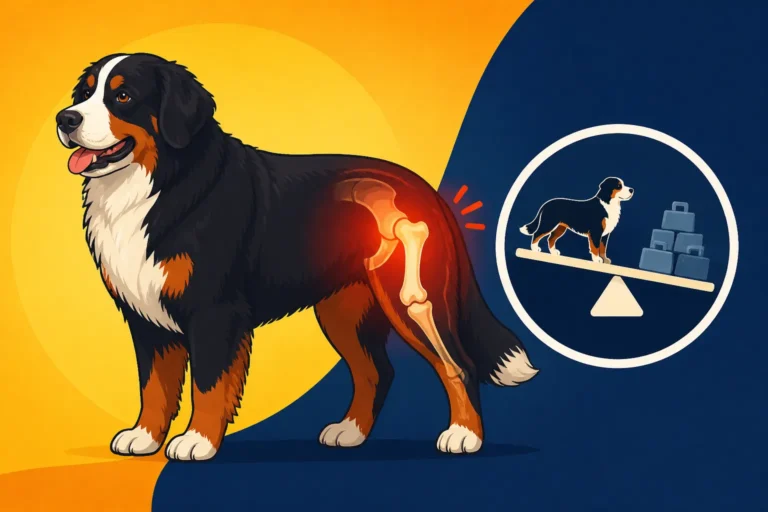
This delicate balance is why issues like hip and elbow dysplasia, osteochondritis dissecans (OCD), and panosteitis (growing pains) are unfortunately common in large and giant breeds. Their bones are growing in length much faster than the surrounding soft tissues, muscles, and ligaments can always keep up. This can create periods of imbalance and stress on the developing joints. A slight misstep in diet or over-exertion can exacerbate these natural stresses, leading to inflammation, malformation, or even permanent damage. It's a constant tightrope walk, and as owners, we're the ones holding the balance pole.
The Unique Demands of a Giant Breed Puppy
Bernese Mountain Dogs aren't just big; they're giant. This distinction is vital when considering their growth. A Labrador puppy might also grow quickly, but it will top out at a much lighter adult weight. A Bernese, however, is destined to carry a significant amount of mass, often over 80-100 pounds, on a frame that needs to be incredibly robust. This means their skeletal system needs to be built with exceptional strength and integrity from the ground up.
Their metabolic rate, caloric needs, and susceptibility to certain orthopedic conditions differ significantly from medium or small breeds. What might be an appropriate diet or exercise routine for a golden retriever puppy could be detrimental to a Bernese Mountain Dog. For instance, too much calcium in a smaller breed's diet might pass unnoticed, but in a rapidly growing Berner, it can severely disrupt bone development. Why a Bernese Mountain Dog Puppy Needs Controlled Calcium is a crucial topic for this very reason. Everything from their food bowl to their play environment needs to be assessed through the lens of supporting a giant in the making.
Growth Plate Development and Sensitivity
A puppy's long bones grow from areas called growth plates (or epiphyseal plates), which are essentially soft cartilage located near the ends of the bones. These plates gradually harden and fuse as the puppy matures, typically closing by around 12 to 18 months in giant breeds like the Bernese Mountain Dog, though some continue to close until 24 months. Until they're fully closed, these growth plates are incredibly vulnerable to injury.
Any trauma to a growth plate, whether from a fall, a hard jump, or repetitive stress, can cause permanent damage, leading to abnormal bone growth, limb deformities, or even lameness. This is why strict exercise protocols are so important for Bernese puppies. You might see a tiny Chihuahua puppy jumping off a couch without a second thought, but a Bernese puppy doing the same could be risking a serious growth plate fracture. These injuries can be incredibly painful, require extensive veterinary intervention, and sometimes, even with the best care, can result in lifelong issues. Protecting these delicate areas is paramount.
The Ideal Growth Rate: What to Expect
It's natural to compare your Bernese puppy to others, or even to their siblings, and wonder if they're "on track." While individual variations exist, there are general guidelines for what a healthy Bernese Mountain Dog puppy's growth looks like. Remember, the goal isn't to make them grow as fast as possible, but rather to encourage steady, healthy growth that allows their bones and joints to develop properly without undue stress. A slow and steady approach is almost always the safest for a giant breed.
Average Weight Milestones by Month
While there's no single perfect weight, breeders and veterinarians often look for a consistent upward trend. A Bernese puppy should gain weight steadily, but without becoming overweight, which puts additional strain on developing joints. Here’s a rough guide, but remember that genetics play a huge role, so don't panic if your puppy isn't precisely hitting these numbers. Always consult your vet for personalized advice.
| Age (Months) | Average Male Weight (lbs) | Average Female Weight (lbs) | Notes |
|---|---|---|---|
| 2 | 18-25 | 15-22 | Still very much a baby, rapid gains start soon. |
| 3 | 30-40 | 25-35 | Rapid growth phase truly kicking off. |
| 4 | 45-55 | 40-50 | Beginning to look like a small dog, not just a fluffy ball. |
| 5 | 60-70 | 50-60 | Significant gains, often reaching half their adult weight. |
| 6 | 70-85 | 60-75 | Often the fastest growth period in terms of absolute pounds gained. |
| 7 | 80-95 | 70-85 | Still growing quickly, but rate may begin to slow slightly. |
| 8 | 90-105 | 80-95 | Nearing adult height, filling out. |
| 9 | 95-110 | 85-100 | Growth rate often visibly decreasing. |
| 10-12 | 100-120 | 90-110 | Reaching near-adult size, continuing to fill out in chest. |
| 18-24 | 100-125+ | 90-115+ | Final muscle and chest development occurs; growth plates fully close. |
Keep in mind that these are averages. A larger-boned male might be heavier, and a more petite female lighter. The most important thing is a smooth, continuous curve, not a sudden spike or plateau unless intentional. Your vet will often track this on a growth chart during The Puppy Shot Series for a Bernese Mountain Dog.
Height Considerations and Proportions
While weight is easy to track, height and overall proportion are equally important. A healthy Bernese puppy should grow in a balanced manner, not become "leggy" too quickly. This means their bones are elongating at a proportional rate, and their body is filling out appropriately to support that height. The standard for a Bernese Mountain Dog is typically 25-27.5 inches for males and 23-26 inches for females at the shoulder once fully mature.
During puppyhood, you might notice periods where they seem all legs, then suddenly they fill out. This is normal. What's concerning is if they appear significantly out of proportion for an extended period, or if their limbs seem bowed or unusually angled. These can sometimes be subtle early indicators of developmental orthopedic disease. What a Bernese Mountain Dog Weighs at Each Month and how it relates to height gives a clearer picture of appropriate development. A good breeder will also monitor these aspects carefully, having an eye for a healthy, balanced structure as their puppies mature.
Gender Differences in Growth Patterns
Just like adult Bernese Mountain Dogs show distinct size differences between sexes, their growth patterns often reflect this from an early age. Male Bernese puppies tend to be larger and heavier at every stage of development, and they often continue to grow for a slightly longer period than females. While a female might reach her adult height and a good portion of her adult weight by 12-15 months, a male might continue to fill out and gain muscle mass until he's 18, 24, or even 30 months old.
This means that a male puppy will typically require more food and might be more prone to rapid growth-related issues if not managed carefully. Understanding these gender-specific tendencies helps you tailor their care more precisely. For example, a larger male puppy might need his exercise even more carefully regulated than a smaller female. Don't fall into the trap of thinking a female Bernese should be as massive as a male; appreciating their inherent differences is part of responsible ownership.
Managing Nutrition for Optimal Growth
Nutrition is arguably the most critical factor in controlling how fast and how healthily a Bernese Mountain Dog puppy grows. It's not just about calories; it's about the right balance of macro and micronutrients, specifically formulated for the unique demands of a giant breed. Getting this wrong, either by overfeeding or by providing an imbalanced diet, can have lifelong consequences for their skeletal development. This isn't the place for guesswork or just feeding whatever generic puppy food is on sale.
The Critical Role of Large Breed Puppy Food
This cannot be stressed enough: a Bernese Mountain Dog puppy must be fed a high-quality large breed puppy food. These specialized formulas are designed with a careful balance of protein, fat, and most importantly, calcium and phosphorus. Unlike regular puppy foods that often contain higher calcium levels to support the rapid growth of smaller breeds, large breed formulas have slightly reduced calcium and phosphorus to promote a slower, more controlled growth rate.
Too much calcium can lead to skeletal deformities, particularly in growth plates, by interfering with the delicate bone remodeling process. It sounds counterintuitive – more calcium equals stronger bones, right? Not for a growing giant breed! Excess calcium can actually cause bones to grow too fast and too densely, making them more susceptible to problems like OCD. Look for brands that specifically state they are formulated for "large and giant breed puppies" or have a calcium content (on a dry matter basis) between 1.0% and 1.5%, with a calcium to phosphorus ratio between 1.1:1 and 1.4:1. Good examples might be formulas from Ollie or those readily available on Chewy and Amazon specifically labeled for giant breeds. This small difference in formulation can make a monumental impact on your puppy's future joint health. Whether Large Breed Food Is Worth It for a Bernese Mountain Dog delves deeper into this essential choice.
Avoiding Over-Supplementation and Nutritional Imbalances
A common, yet potentially dangerous, mistake owners make is trying to "help" their puppy by adding supplements like extra calcium, vitamins, or even raw eggs and milk. With a large breed puppy food, these additions are almost always unnecessary and often harmful. As discussed, excess calcium is a major culprit in developmental orthopedic diseases. Commercial large breed puppy foods are already carefully balanced to provide everything your growing Berner needs.
Adding supplements can throw off this delicate balance, leading to the very problems you're trying to prevent. For example, too much Vitamin D can cause calcium toxicity, and imbalances in trace minerals can interfere with bone and cartilage formation. Always consult your veterinarian before adding any supplements to your Bernese puppy's diet, especially during their critical growth phases. Unless there's a diagnosed deficiency, more is definitely not better when it comes to puppy nutrition.
Feeding Schedules and Portion Control
How you feed your Bernese puppy is almost as important as what you feed them. Instead of one or two large meals a day, it's generally recommended to feed Bernese puppies two to three smaller meals spread throughout the day. This helps with digestion, prevents huge spikes in blood sugar, and can even help reduce the risk of bloat later in life. Why a Bernese Mountain Dog Never Gets One Big Meal explains the rationale behind this.
Portion control is also key. Follow the feeding guidelines on your chosen large breed puppy food bag, but always treat them as a starting point. Every puppy is an individual, and their metabolic rate can vary. The best indicator of appropriate feeding is your puppy's body condition. You should be able to easily feel their ribs when you run your hand along their side, without seeing them prominently. If you can't feel the ribs, your puppy is likely overweight, and adjustments to their food intake are necessary. If the ribs are too visible, they might need a slight increase, but ensure they aren't growing too fast overall. Regularly assessing The Body Condition a Bernese Mountain Dog Should Carry is a simple yet effective way to manage their weight.
Exercise and Activity During Puppyhood
Just as critical as nutrition is the type and amount of exercise a growing Bernese Mountain Dog puppy receives. Their boundless puppy energy can make you want to play endlessly, but unrestrained activity can be incredibly detrimental to their developing joints and growth plates. The mantra for Bernese puppies is "controlled and moderate" – avoiding high-impact activities while still allowing for natural, puppy-like play.
The 'Five Minute Rule' and Gentle Exercise
Many large breed breeders and veterinarians advocate for the "five minute rule" as a guideline for structured exercise. This rule suggests that a puppy gets five minutes of structured exercise per day, per month of age. So, a 3-month-old puppy would get 15 minutes of structured walk time, a 4-month-old 20 minutes, and so on. This isn't to say they can't play freely in a safe, enclosed yard for longer, but it sets a limit on leashed walks, jogs, or intense play sessions that can put repetitive stress on their joints.
The key here is structured exercise. Short, slow walks on a leash are fine. Running alongside a bike or playing fetch for extended periods with hard stops and turns is generally not recommended during their prime growth phases. Encourage exploration and sniffing, which is mentally stimulating without being physically demanding. This helps develop muscles gradually without overtaxing vulnerable growth plates. For more on this, you can refer to The Five Minute Rule and a Bernese Mountain Dog Puppy.
Protecting Joints During Play
Puppies, especially Berners, are notorious for their clumsy, enthusiastic play. While this is adorable, it can be risky. High-impact activities like jumping off furniture, leaping in and out of cars, or intense roughhousing with much older, larger, or more boisterous dogs should be avoided. These actions can lead to sudden, severe impacts on their still-forming joints and growth plates.
Instead, encourage gentler play sessions. Tug-of-war is fine in moderation, but ensure your puppy isn't constantly bracing their body and twisting. Short games of fetch on soft surfaces, like grass, are better than concrete. Supervise play with other dogs to ensure it doesn't get too wild. If you have stairs in your home, it's often recommended to carry your Bernese puppy up and down them until they are a bit older, or at least control their ascent and descent. Carrying a Bernese Mountain Dog Puppy Up Stairs is a common recommendation for this reason. The goal is to let them be a puppy, but a carefully protected one.
Safe Surfaces and Activities
The surfaces your Bernese puppy walks and plays on also make a difference. Hard, unforgiving surfaces like concrete, asphalt, or slick hardwood floors offer little shock absorption and can increase strain on joints. Soft surfaces are always preferable. Think grass, packed dirt trails, or even thick rugs indoors.
Activities like swimming (once cleared by your vet and if they enjoy it) can be excellent low-impact exercise for building muscle without joint strain, but even this needs to be introduced gradually. Steep hills or prolonged uphill/downhill walking should also be limited as they can put uneven stress on hips and elbows. Remember, your goal is to build a strong, healthy foundation, not to create a canine athlete in their first year. Patience now means a much healthier adult dog down the road.
Common Growth Concerns and What They Mean
Even with the best care, some Bernese puppies might experience growth-related issues due to genetics, or simply because of the inherent challenges of being a giant breed. Knowing what signs to look for and when to consult your veterinarian is crucial for early intervention and better outcomes. Don't ignore subtle changes, as they can sometimes indicate a more significant underlying problem.
Too Fast vs. Too Slow Growth
It’s often a balancing act: we worry about growing too fast because of the orthopedic risks, but then we might fret if our puppy seems to be growing too slowly.
- Growing Too Fast: This is typically a bigger concern for Bernese Mountain Dogs. If your puppy is significantly exceeding the average weight milestones and appearing overweight, it’s a red flag. Excess weight puts immense strain on developing joints, increasing the risk and severity of conditions like hip and elbow dysplasia. An overly high-calorie diet or a diet too rich in calcium is usually the culprit. Prompt dietary adjustment under veterinary guidance is essential.
- Growing Too Slow: While less common than growing too fast, a Bernese puppy that is consistently underweight or significantly lagging behind growth charts could indicate other issues. This might include parasites, malabsorption problems, a poor quality diet, or other underlying health conditions. Your vet will want to investigate the cause and ensure your puppy is getting adequate nutrition and care. A puppy off its food is always a cause for concern, especially in giant breeds. A Bernese Mountain Dog Puppy Off Its Food could be a symptom of many things, so it's always best to get it checked out.
Limping and Gait Abnormalities
Any limping, stiffness, or change in your Bernese puppy's gait should be taken seriously and warrants an immediate veterinary visit. It's easy to dismiss a subtle limp as "just growing pains" or a minor sprain from play, but for a giant breed puppy, it could be a sign of something much more severe.
Common culprits in growing Bernese puppies include:
- Panosteitis (Growing Pains): This is inflammation of the long bones, often presenting as a shifting lameness, where the puppy limps on one leg, then another. While painful, it's usually self-limiting and resolves with age, but requires pain management and careful activity restriction. The Shifting Limp of a Growing Bernese Mountain Dog describes this in more detail.
- Osteochondritis Dissecans (OCD): This is a condition where cartilage in a joint (often the shoulder or elbow) fails to properly mature, leading to a flap of cartilage that can detach, causing pain and lameness. It often requires surgical intervention.
- Hip or Elbow Dysplasia: These are genetic conditions where the joints develop abnormally, leading to looseness (laxity) and eventually arthritis. While genetic, environmental factors like rapid growth and excessive exercise can exacerbate them. Signs can be subtle limping, difficulty rising, or bunny hopping. Hips That Fail Under a Bernese Mountain Dog's Weight is a topic no Berner owner wants to face.
Never assume a limp will just "get better." Early diagnosis and treatment are critical for managing these conditions and improving your puppy's long-term comfort and mobility.
Angular Limb Deformities and Other Issues
Less common but still possible are angular limb deformities, where the bones in a limb grow at different rates, causing the leg to bow or twist. This is a severe orthopedic issue that often requires specialized veterinary care, potentially involving complex surgery to correct. These are often seen as the puppy's legs don't grow straight or appear "crooked."
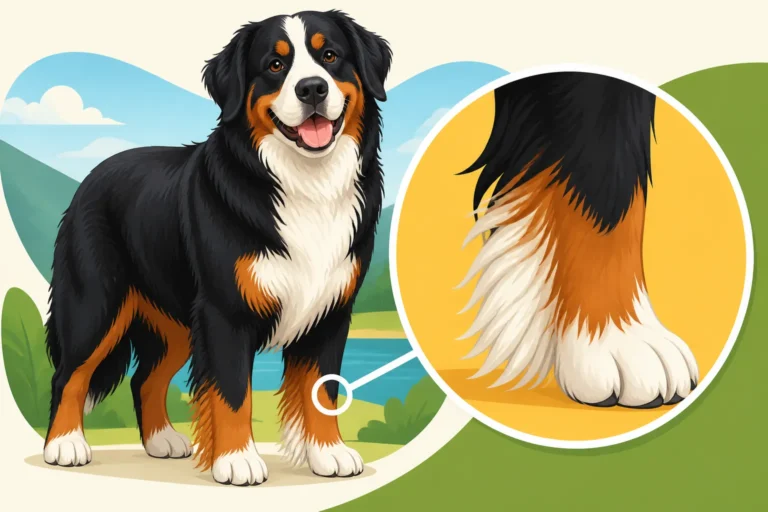
Another point of concern, though often identified earlier by breeders, can be issues with paw development. Sometimes due to rapid growth or nutritional imbalances, puppies can have splayed feet or weak pasterns (the equivalent of a human wrist). While not as severe as hip or elbow dysplasia, these can impact comfort and mobility, particularly in a heavy breed. Good breeders are vigilant about screening for these issues, and regular veterinary check-ups allow for early identification and management.
Monitoring Your Bernese Puppy's Development
Proactive monitoring is your best defense against growth-related problems. Beyond just feeding them and enjoying their puppy antics, being an active participant in observing and assessing their development is crucial. This involves regular weigh-ins, physical checks, and consistent communication with your veterinary team.
Regular Vet Check-ups and Growth Tracking
Your veterinarian is your most important partner in monitoring your Bernese puppy's growth. During routine puppy visits for vaccinations and deworming, your vet will weigh your puppy and perform a thorough physical examination. This is their opportunity to assess their body condition, listen to their heart, check their gait, and feel their joints for any signs of discomfort or abnormal development. Don't hesitate to ask them to show you how they assess your puppy's growth.
It’s beneficial to keep a personal record of your puppy’s weight, even if it’s just with a home scale. This allows you to track their progress between vet visits and spot any sudden deviations from the healthy growth curve. Be prepared to discuss your puppy's diet, exercise routine, and any observations you've made about their movement or behavior. These details help your vet get a complete picture. Seeing the Vet Twice a Year With a Berner becomes even more important as they grow and mature.
Body Condition Scoring: Feeling for Ribs
Body condition scoring (BCS) is a simple, hands-on method you can use at home to ensure your Bernese puppy isn't too thin or, more critically, too heavy. Remember, the goal for a growing giant breed is to be lean. You should be able to easily feel their ribs when you gently run your hands along their sides, much like feeling the back of your hand. You shouldn't see their ribs prominently, but you also shouldn't have to press hard to feel them.
It's also important to check their waist: when viewed from above, there should be a discernible waistline behind the ribs, and when viewed from the side, their belly should tuck up slightly, not hang down. A common mistake with fluffy breeds like Berners is that their thick coat can hide excess weight, so a visual check isn't enough. You must get your hands on them regularly to feel their body condition. If you're unsure how to accurately assess your puppy's BCS, ask your vet to demonstrate it during your next visit. Finding a Bernese Mountain Dog's Ribs Under the Coat is an art every Berner owner should master.
Documenting Milestones and Changes
Keeping a small journal or even just a note on your phone to document your Bernese puppy's milestones and any subtle changes can be incredibly helpful. Note down:
- Their weight each month.
- When they first seemed to limp, how long it lasted, and which leg.
- Any changes in appetite or energy levels.
- When they mastered a new trick or overcame a fear.
- Specific observations, like "seemed stiff after a long play session" or "bunny hopped up the stairs this week."
This detailed record can provide invaluable information to your veterinarian if a problem arises. Often, owners recall a symptom but forget the exact timing or duration. A written record provides objective data, helping your vet make a more accurate diagnosis. It also gives you a wonderful keepsake of your puppy's journey from a tiny fluffball to a magnificent adult, reminding you of The Month a Bernese Mountain Dog Stops Growing Up. Every stage is precious, but these early months are particularly formative for their physical future.
Disclaimer
This article is for general informational purposes only and does not constitute professional advice. Laws, prices and regulations vary by location and change over time. Consult a qualified professional for guidance on your specific situation.